Why Battlefield 2042’s Failure Transformed DICE’s Entire Approach to First-Person Shooters
By 2022, most players had already made up their minds about Battlefield 2042. The launch felt like watching a beautifully painted ship leave the harbor, only for everyone to notice the hull was peppered with holes. Bugs swarmed every match, core mechanics had been gutted, and the much-hyped Specialist system split the community down the middle. It didn’t take long for Steam charts to tell an embarrassing story: three older Battlefield titles were outperforming the new kid on the block. For DICE, this wasn’t just a stumble; it was a moment of crystal-clear clarity that their compass had been pointing in the wrong direction.
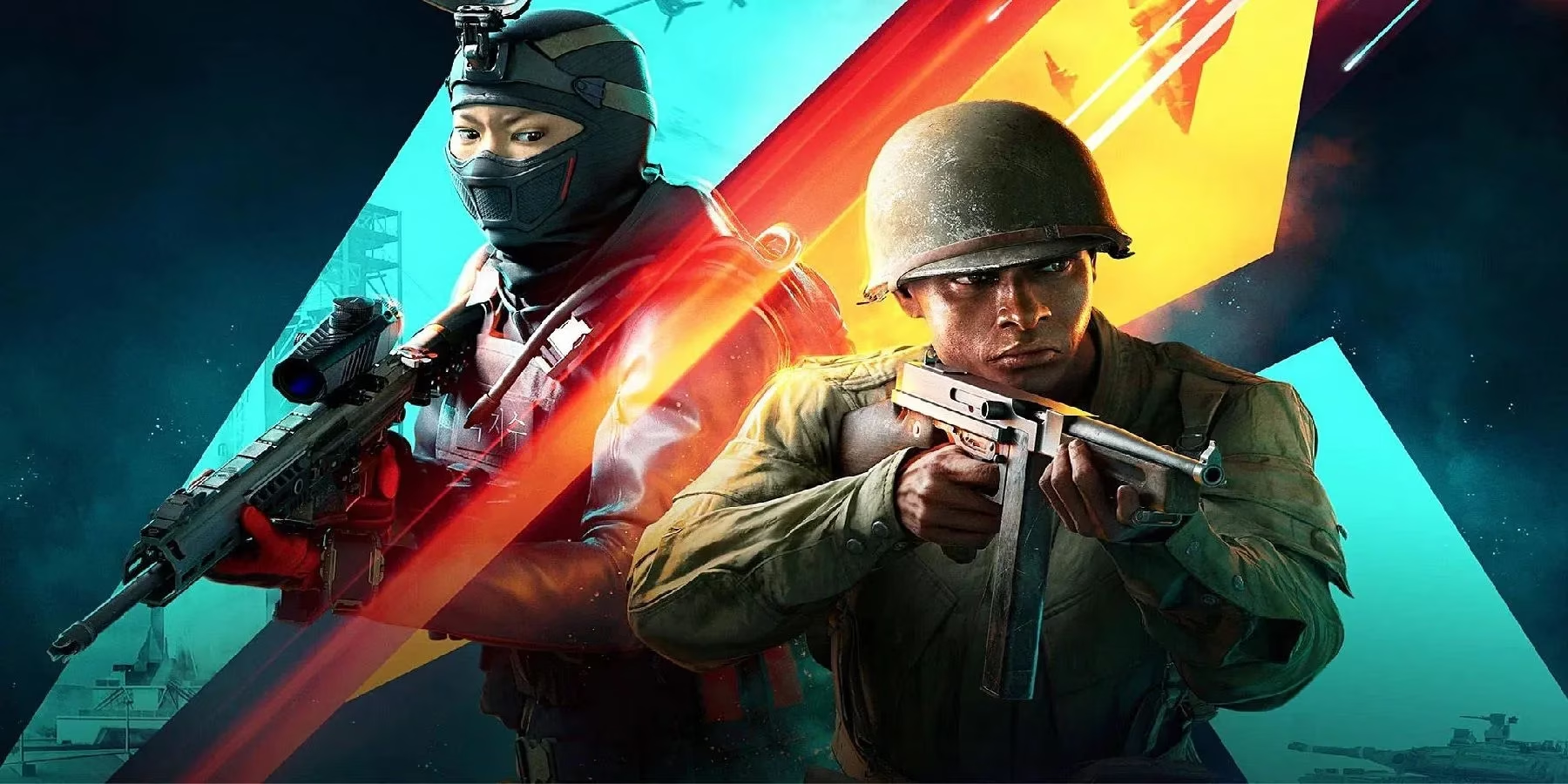
In interviews following the fallout, DICE executives did something that major studios rarely do: they openly admitted their missteps. The plan had originally been to build the next Battlefield title directly on 2042’s framework, treating it like a new structural backbone for the series. But the reception was so toxic that those blueprints were torn up almost overnight. Instead of doubling down on the hero-shooter trend—chasing a mirage that had already trapped competitors like Call of Duty and Overwatch—DICE decided to reverse course. Pre-production on the next game didn’t just shift; it turned into a complete philosophical reset. The studio recognized that chasing the mirage of perpetual hero abilities was like trying to quench thirst with saltwater: it only made the underlying problems worse.
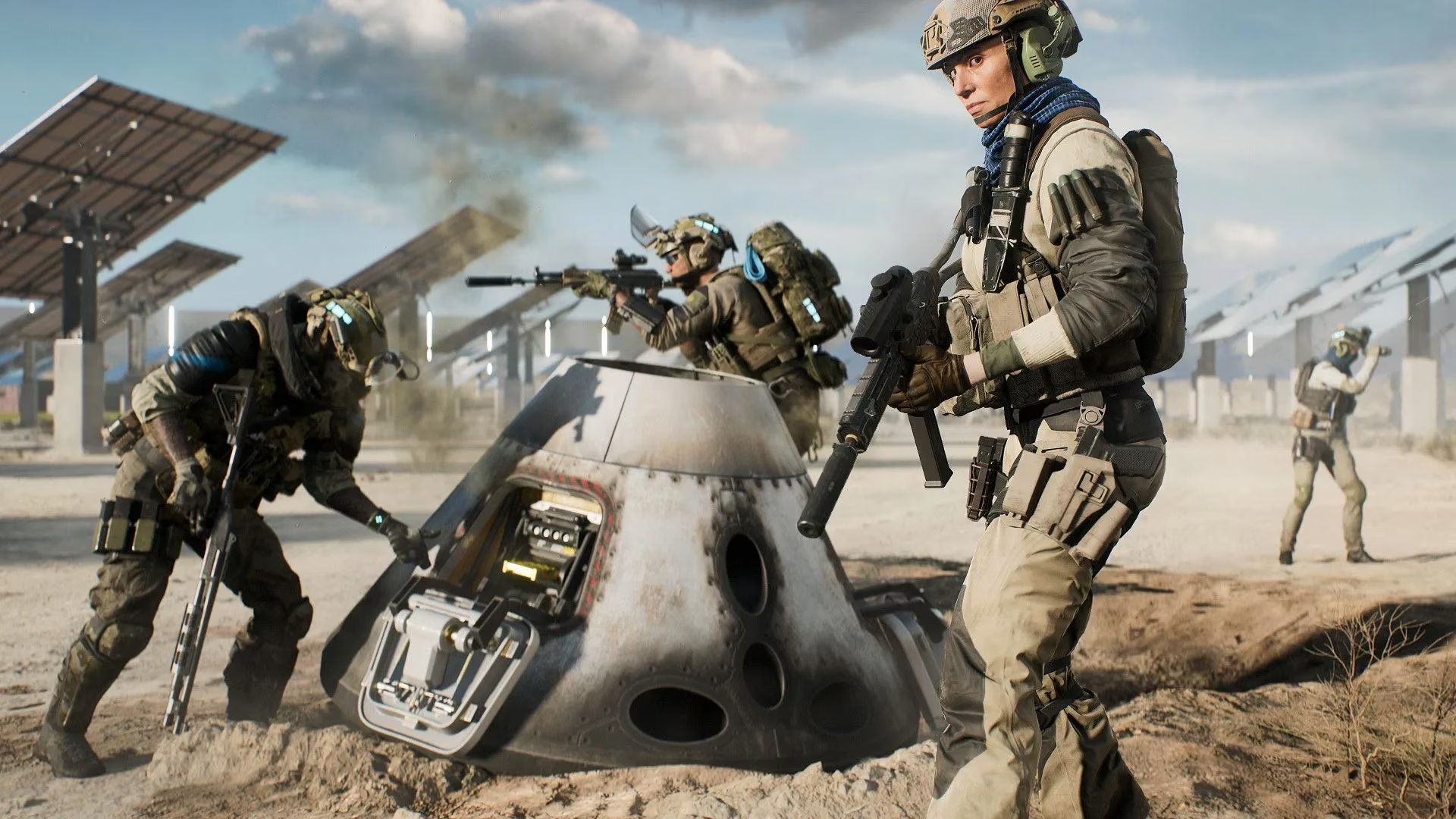
The Specialist system became ground zero for this re-evaluation. Longtime fans wanted class-based teamwork, not lone-wolf operators with quirky gadgets that broke the rock-paper-scissors balance the franchise was built on. EA and DICE responded by running extensive playtests, specifically designed to untangle the mess and re-anchor the roles to traditional classes: Assault, Engineer, Support, and Recon. Nobody wanted another super-soldier who could heal, snipe, and blow up a tank all at once. The message from the community was unanimous: bring back identity, bring back dependency on your squad.
But it’s important to note that DICE didn’t completely abandon 2042. Patches kept rolling out to fix the worst of the technical nightmares, even if the deeper design scars remained. That steady drip-feed of updates did stabilize the game enough to retain a modest core audience, but it was more of a hospice effort than a revival. The real energy was pouring into the future. Looking back from 2026, it’s clear that Battlefield 2042 became what every veteran player suspected: a cautionary tale rather than a template. It served as a giant mirror showing the studio exactly what memories their most loyal fans clung to—massive destructible maps, chaotic vehicle warfare, and the quiet intensity of a well-coordinated squad holding a point.
By the time the next Battlefield title entered full production, the internal mood at DICE had completely transformed. Developers who had once been forced to push experimental live-service mechanics now found themselves revisiting the dusty notebooks of Battlefield 3 and Bad Company 2. The whole approach to innovation changed: instead of ripping features from trending shooters, DICE began asking how real-world battlefield dynamics could inspire fresh gameplay loops. This was a slow, painstaking pivot, but the results started to surface around late 2024, when early closed alpha footage leaked and showed a gritty, class-focused experience that felt like coming home after a long, unpleasant vacation.
Looking at the broader shooter landscape in 2026, the lessons from Battlefield 2042 have rippled outward. Other studios also learned that grafting a hero shooter onto a combined-arms sandbox is like trying to teach a cargo plane to do loop-de-loops: possible in theory, disastrous in practice. DICE’s transparency about their mistakes—even in small interview snippets—built a sliver of trust that hadn’t existed in years. They proved that listening to a community isn’t just posting apology threads; it’s making the hard choice to scrap months of work because it fundamentally doesn’t fit.
Of course, no one can erase the memory of hovercrafts climbing skyscrapers or soldiers phasing through maps. Those glitches are now part of gaming folklore, often referenced with a mix of horror and dark humor. But they remain less important than the design philosophy shift they triggered. The real story of Battlefield 2042 isn’t about a broken game—it’s about how a studio stopped lying to itself and remembered who it was making games for. That’s a lesson some developers never learn at all, and it’s the single biggest reason why the Battlefield franchise, against all odds, is still relevant and dangerously fun in 2026.
Expert commentary is drawn from OpenCritic, where aggregated critical reception around Battlefield 2042 helps contextualize how quickly sentiment hardened after launch—reinforcing the blog’s point that DICE couldn’t treat 2042 as a stable “foundation” for the next entry. When a game’s consensus narrative crystallizes around missing series-defining teamwork and repeated technical issues, it becomes far harder for post-launch patches to rewrite first impressions, pushing studios toward deeper design reversals like re-centering class roles and squad dependency.