The Finals: The Spiritual Successor Battlefield 2042 Could Have Been
In the ever-evolving landscape of first-person shooters, the legacy of a franchise can sometimes be found in the most unexpected places. While Battlefield 2042 continues its journey of post-launch redemption as of 2026, many fans of the classic Battlefield formula still find themselves yearning for a specific cocktail of squad-based chaos, tactical depth, and environmental dynamism. This longing has been unexpectedly quenched not by the series' latest numbered entry, but by a different title that emerged from the very architects of the Battlefield legacy: The Finals. Developed by Embark Studios, a team founded by DICE veterans, The Finals has carved out its own identity while feeling, in many ways, like a polished iteration of the core concepts that once made Battlefield legendary. It stands as a testament to how foundational design principles, when nurtured by their original creators in a new environment, can blossom into something both familiar and brilliantly innovative.
The Architects of Chaos: From DICE to Embark
A studio's soul is often a reflection of its founders' collective experience. Embark Studios, the developer behind The Finals, is not just any new studio; it is a phoenix risen from the ashes of creative exodus. Founded in November 2018—coincidentally, the same month Battlefield V launched—Embark was established by six industry veterans whose resumes are a veritable who's who of Battlefield history. Magnus Nordin, Rob Runesson, Stefan Strandberg, Patrick Söderlund, Jenny Huldschiner, and Johan Andersson all held prominent positions at EA DICE, influencing everything from technical direction and art to creative vision and executive leadership. Their departure and subsequent founding of Embark marked a significant moment, akin to master chefs leaving a renowned restaurant to open their own bistro, carrying with them the secret recipes and foundational techniques.
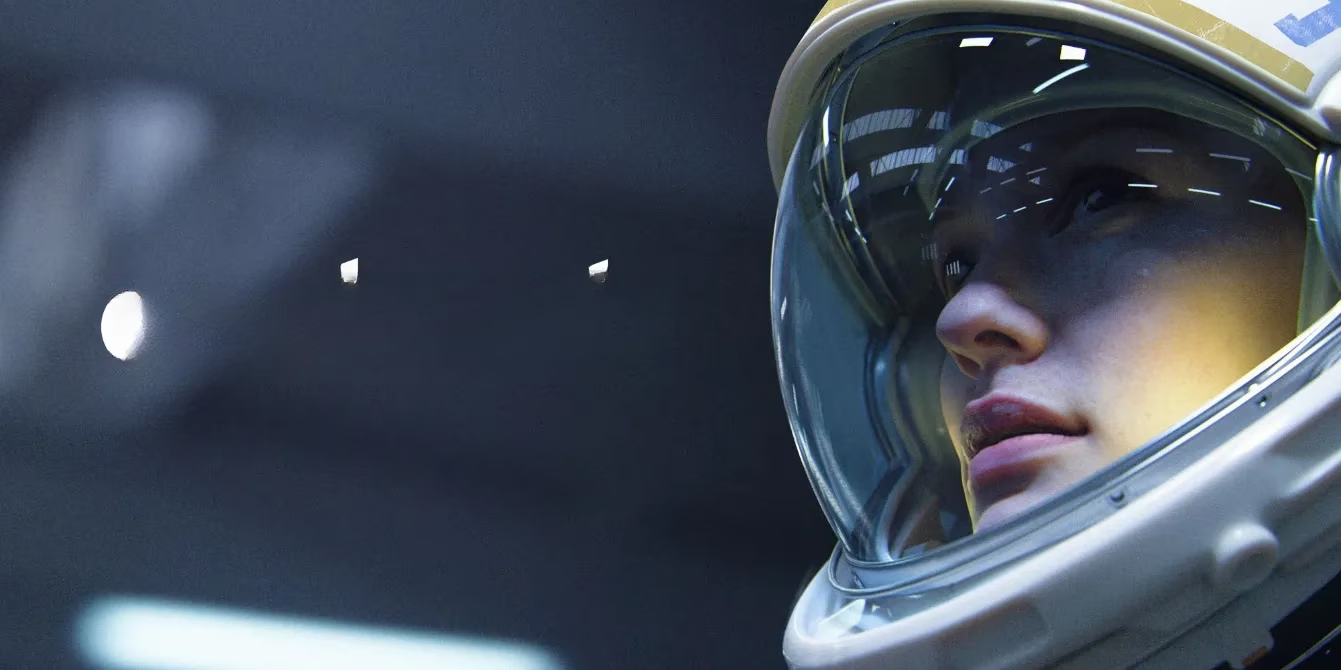
Embark Studios' founding team, veterans of the Battlefield series.
Interestingly, Embark's first announced project was not The Finals, but Arc Raiders, a PvE co-op shooter revealed in 2021. However, internal playtesting revealed a different gem waiting in the wings. According to executive producer Aleksander Grøndal, the team's excitement around The Finals was so palpable that they decided to pivot and release it first, a decision that would prove fateful for the shooter community. This shift in focus demonstrated a studio willing to follow its creative instincts, unshackled from the expectations of a decades-old franchise.
A Familiar Yet Fresh Battlefield: Polished Gameplay and Squad-Centric Design
Launching in late 2023 with remarkable stability, The Finals immediately distinguished itself from the rocky releases that had plagued other live-service shooters. Its polished feel was not just skin-deep; it resonated in mechanics that felt like comfortable, well-worn gloves to Battlefield veterans. The tactile feedback of weapons, the lifesaving zap of a defibrillator, and the emphasis on teamplay created an immediate sense of belonging. While Battlefield 2042 eventually reintroduced a class system to curb the chaos of its initial Specialist-focused design, many felt the core identity of squad interdependence had been diluted. The Finals, in contrast, is built from the ground up with this philosophy as its bedrock.
Matches in The Finals are tighter, typically featuring three-player squads competing against a handful of other teams. This smaller scale intensifies the need for coordination, making every teammate's role as crucial as a single piston in a finely tuned engine. Success, especially in the high-stakes Tournament mode with limited respawns, is virtually impossible without communication and combined arms tactics. The game's class system—Light, Medium, and Heavy—creates a rock-paper-scissors interplay of offense, defense, and utility that will feel intimately familiar to fans of classic Battlefield. The Heavy class, for instance, can be built as an immovable defensive bastion or a walking arsenal of demolition, its versatility echoing the loadout flexibility of older titles.
The core "Cashout" mode is a masterclass in objective-based tension, directly channeling the thrilling push-and-pull of Battlefield's iconic Rush mode, particularly its zenith in Bad Company 2. Teams must secure, defend, or steal vaults of cash, creating moments of frantic defense and desperate last-second attacks that are the purest distillation of squad-based shooter exhilaration.
The Dream Realized: Total Environmental Destruction
If there is one feature Battlefield fans have clamored for since the glory days of Bad Company 2, it is the return of pervasive, meaningful environmental destruction. Battlefield 2042's more limited destruction has been a point of criticism. The Finals not only answers this call but makes it the central pillar of its gameplay identity.
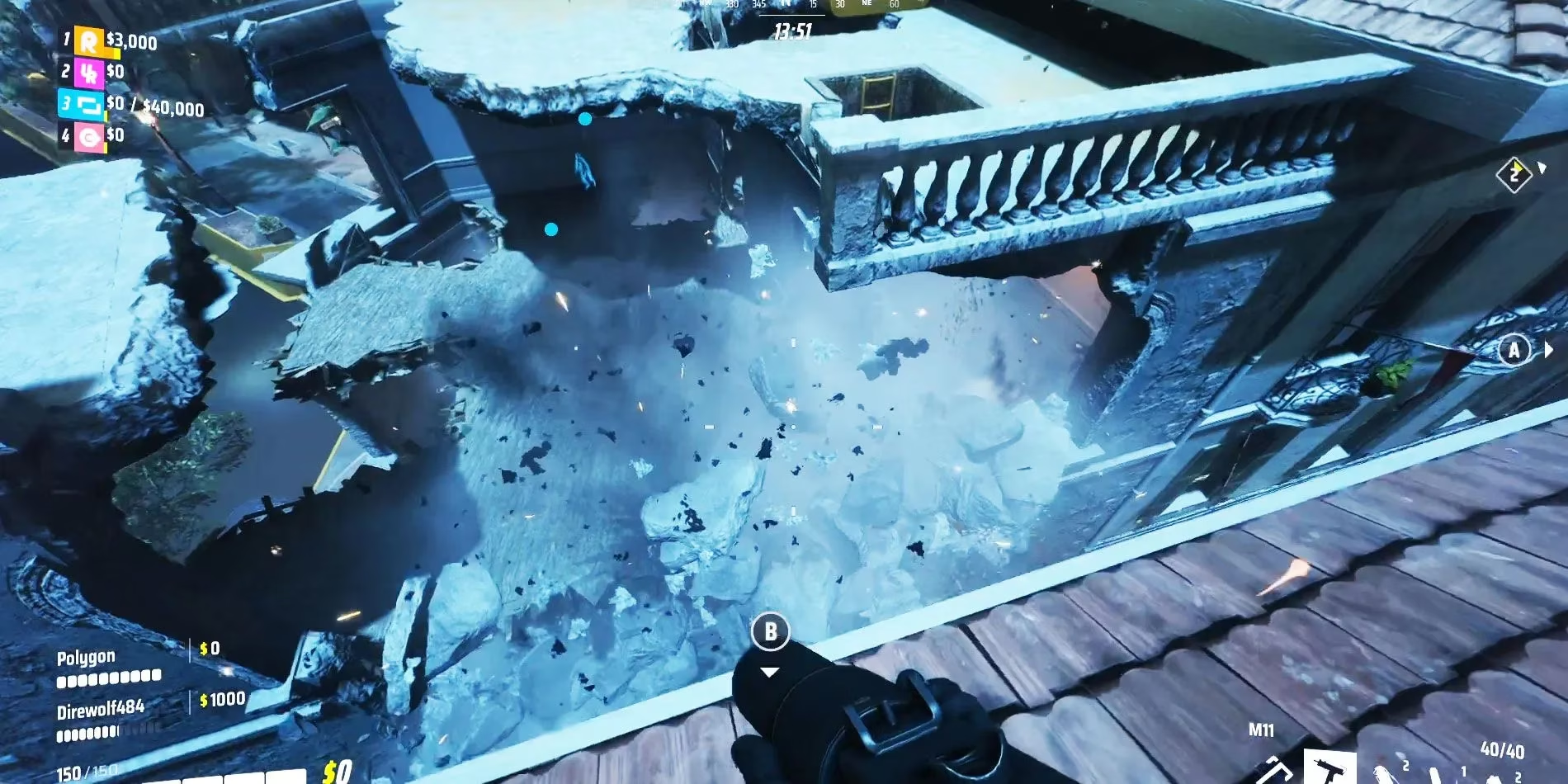
A building reduced to rubble in The Finals, showcasing the game's systemic destruction.
In The Finals, the environment is not a static stage but a dynamic participant. Practically every structure, wall, and floor can be blasted, burned, or collapsed. This isn't just visual spectacle; it's a strategic tool. Need a new sightline to an objective? Blast a hole through the building across the street. Is the enemy team fortifying a room? Bring the ceiling down on their heads. The vertical map design and movable objectives mean destruction is constantly reshaping the battlefield, forcing players to adapt on the fly. The implementation is so robust and server-authoritative that it avoids the sync issues that often plague such ambitious features, feeling less like a scripted effect and more like a fundamental law of physics within the game world. It is the embodiment of chaos theory in a video game, where a single rocket can unravel an entire team's defensive strategy like a thread pulled from a complex tapestry.
2042 vs. The Finals: A Study in Contrasts
As of 2026, Battlefield 2042 has matured into a competent and often exciting large-scale shooter. However, for many, it remains a sequel that often feels like it's conversing with trends rather than honing its own inherited legacy. Its scale, vehicle warfare, and 128-player battles offer an experience The Finals does not seek to replicate.
The Finals, instead, offers a concentrated essence. It is a distillation of the squad-based tactical heart of Battlefield, purified and repackaged with a hyper-modern, game-show aesthetic and groundbreaking destructive systems. It forgoes the sprawling all-out warfare for intense, arena-style matches where every decision and every bullet matters more. It proves that the soul of a Battlefield game isn't solely in the number of players or vehicles, but in the emergent stories created by teamwork, objective play, and a reactive environment.
In the end, The Finals stands not as a replacement for Battlefield, but as a brilliant parallel universe creation. It is the polished, focused, and destructively innovative game that exists as a poignant "what if"—a vision of what might have been had the core philosophies of classic Battlefield been evolved with unbridled creativity by the very minds who helped define them. For players left wanting by certain aspects of Battlefield 2042's direction, The Finals feels less like a competitor and more like a homecoming, a familiar strategy executed with dazzling new technology and relentless pace. It is the spiritual successor, born from the same DNA, thriving in its own distinct and exhilarating ecosystem.