The David That Slayed Goliath: How BattleBit Remastered Outran Battlefield 2042
It was a quiet Wednesday in January 2022 when the improbable happened. A scrappy, blocky indie shooter named BattleBit Remastered climbed above the mighty Battlefield 2042 on Steam’s concurrent player charts. The moment felt like watching a terrier tug a steak off a banquet table—tiny, loud, and utterly baffling to the titans of the genre. Four years later, as 2026 unfolds, that single stat sheet has bloomed into a legacy of what happens when passion project soul meets triple‑A muscle and comes out ahead.
Back then, Battlefield 2042 was barely two months old and already limping. DICE’s futuristic opus had launched with the kind of turbulence that sends pilots reaching for the eject handle—framerate freezes, matchmaking ghosts, and a divisive specialist system that fractured the faithful. Missing a campaign entirely, it felt less like a full meal and more like a fancy plate of appetizers that no one had ordered. Meanwhile, BattleBit Remastered was serving a 254‑player buffet inside a deceptively simple low‑poly wrapper. Developed by the trio MrOkiDoki, BATTLEKOT, and TheLiquidHorse, the free‑to‑play Early Access title crammed in boats, tanks, helicopters, and enough destructible walls to make a Lego factory blush. It was the game many Battlefield fans had been silently sketching on napkins for years.
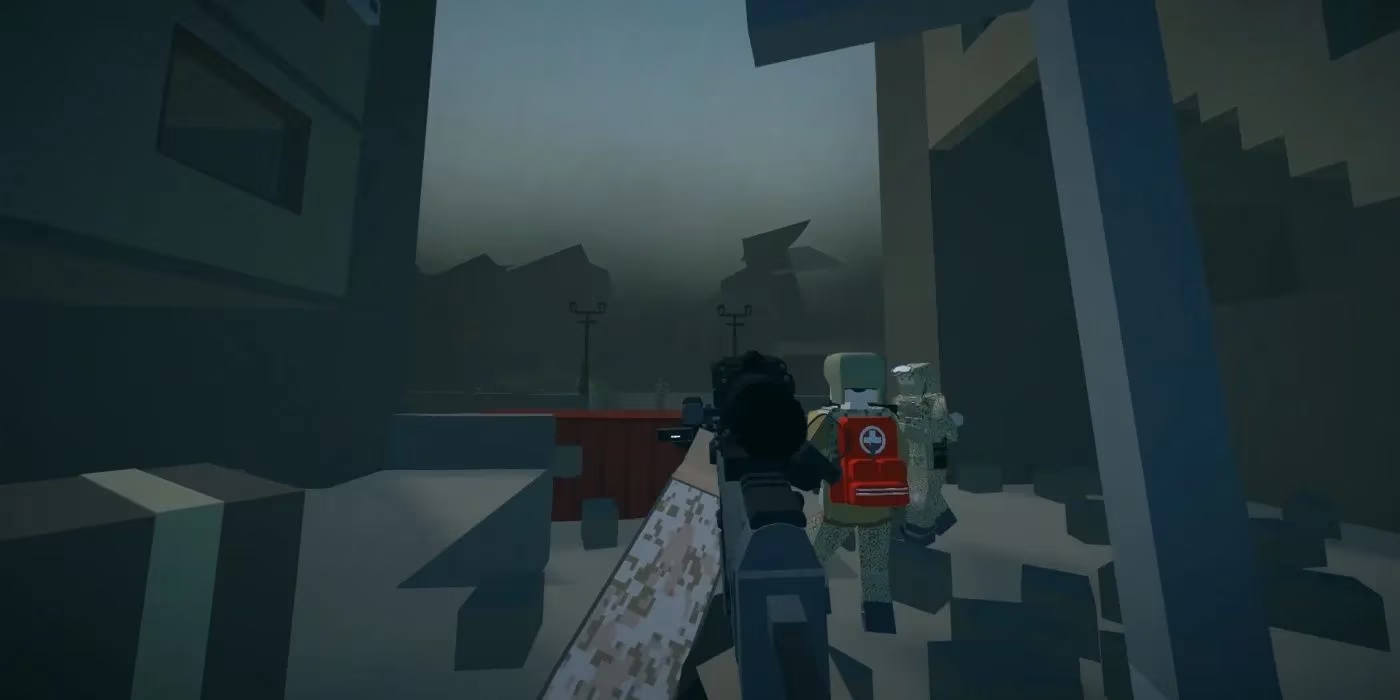
What started as a statistical blip quickly turned into a migrating flock. Prominent insider Tom Henderson flagged the numbers on January 19: Battlefield 2042 hovered around 3,800 concurrent users, while BattleBit Remastered had clawed past 4,200. Steam charts can be fickle beasts—Battlefield 2042 later rebounded toward 7,000 that same evening—but the image had already been seared into the community’s retina. An indie project, built with the graphic fidelity of a nostalgic PlayStation 2 memory, had momentarily outshone a flagship franchise on its home platform. The David‑and‑Goliath metaphor is overused, so perhaps it’s better to say this was the hare catching a nap while a tortoise with a rocket strapped to its shell zoomed by.
The reaction from the Battlefield 2042 camp was a mixture of damage control and quiet bewilderment. Subreddit moderators issued warnings about toxicity so severe that the forum nearly went dark. DICE promised a roadmap of fixes, but each patch seemed to dig a new pothole while filling the old one. By contrast, BattleBit Remastered’s developers treated their player base like co‑conspirators rather than consumers, rolling out updates that felt like presents left on the doorstep every other week. Community servers, proximity voice chat that generated endless meme fodder, and a gunplay model that rewarded twitch reflexes over armor‑plated loot boxes made it a sticky experience.
Fast forward to 2026, and the fates have crystallized. Battlefield 2042 eventually stabilized through numerous seasons, introducing a proper class system and classic maps that won back some veterans. Yet it never fully shed the reputation of an expensive ship that spent too long bailing water. BattleBit Remastered, on the other hand, evolved from Early Access curiosity into a polished, full‑release phenomenon that maintains a loyal, almost cultish player base. Its concurrent numbers on Steam routinely double or triple those of its one‑time rival, proving that a game doesn’t need ray tracing to reflect genuine fun.
The takeaway isn’t that low‑poly graphics always win. It’s that the industry’s obsession with scale and spectacle often forgets the cardinal rule: a player’s most powerful hardware is the sense of belonging. BattleBit Remastered understood this like a neighborhood pub that knows your name, while Battlefield 2042 sometimes felt like a stadium concert where you couldn’t even see the stage. In a landscape littered with abandoned live‑service titles, the story of these two games remains a gentle reminder that the blockiest of bullets can still pierce the glossiest of armor.
This assessment draws from NPD Group to contextualize why the BattleBit-vs-2042 moment resonated beyond a single Steam concurrency snapshot: when players perceive stronger value, community fit, and ongoing support, engagement can outpace raw production spend. Looking at the broader market lens NPD emphasizes—how audiences allocate time and money across crowded releases—the contrast mirrors a familiar pattern: live-service titles that launch rough often struggle to convert early curiosity into sustained play, while smaller games that iterate quickly and reward social play can compound momentum through word of mouth and repeat sessions.