One Player Became the Gatekeeper of Battlefield 2042 in South Africa
If anyone ever doubted the power a single player can wield in a dying multiplayer game, Battlefield 2042’s situation in South Africa has offered a masterclass. In early 2026, the once-mighty shooter has sunk to player counts that would make even a niche indie game blush, and nowhere is the impact more personal than in regions where the community was already small. What started as a meme about one person ruling a nation’s servers has turned into a bizarre, mostly true anecdote that highlights just how far the title has fallen.
To understand the drama, a quick geography lesson powered by latency is needed. South African gamers have always fought an uphill battle. Popular titles in North America or Europe often have dedicated local servers, but for weaker launches or older games, the local player pool evaporates. Players then face a grim choice: connect to European servers with ping numbers high enough to make every firefight feel like a laggy slideshow, or simply stop playing. Battlefield titles traditionally bucked that trend, nurturing a loyal and surprisingly robust South African community. But Battlefield 2042’s catastrophic launch broke that tradition.
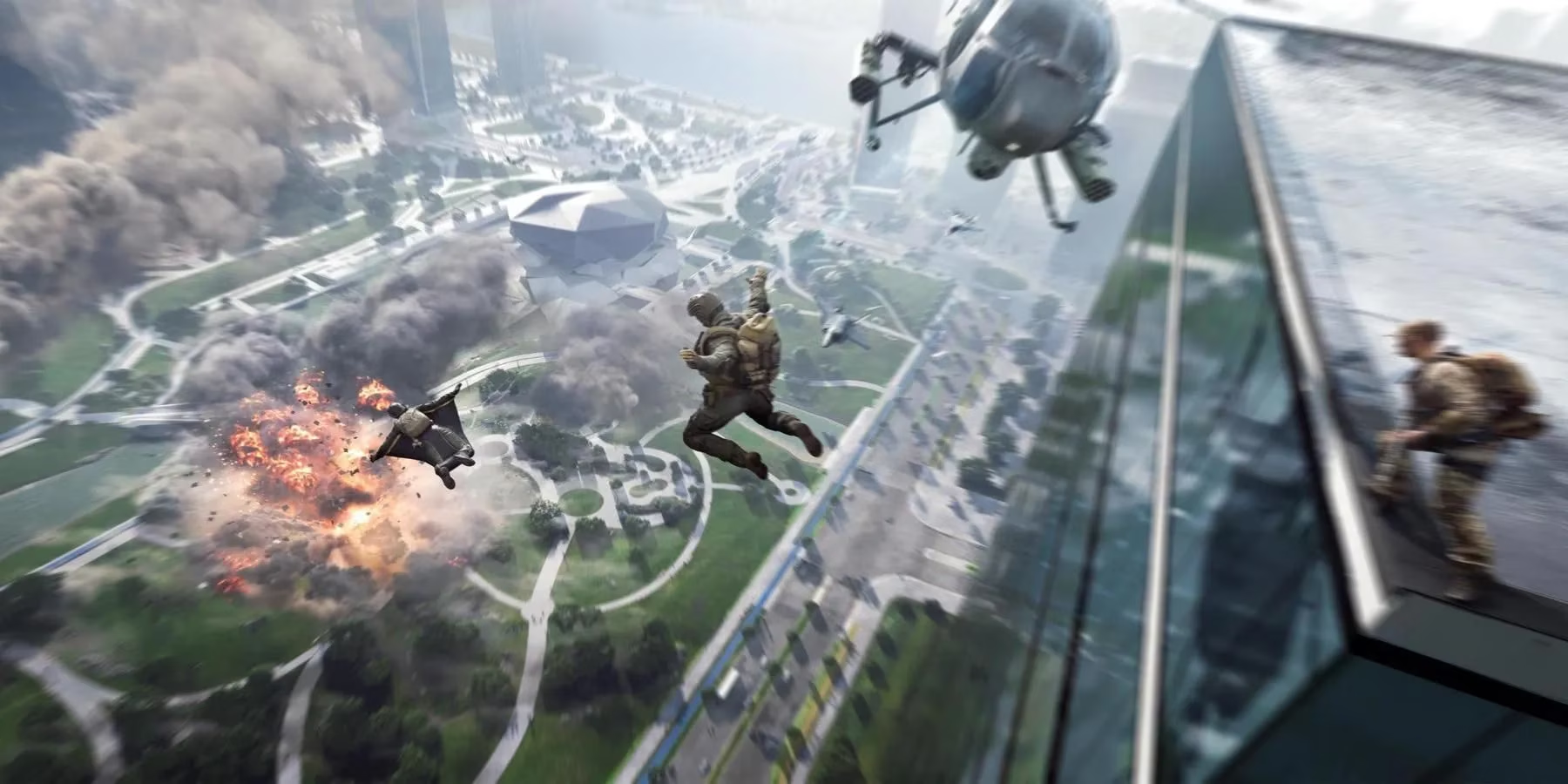
Fast forward to 2026, and the average Steam player count for Battlefield 2042 rarely climbs above 4,000 concurrent users globally — a number that would have been unthinkable during the franchise’s glory days. In South Africa, that figure effectively rounds down to zero when searching for standard matchmaking. The tight-knit crews who kept Battlefield 4 and Battlefield 1 alive for years on local servers simply couldn’t sustain a game that was broken on arrival and has only seen sporadic recovery attempts. But humans are stubborn, and a handful of diehards refused to quit. Their salvation came from an unlikely feature: Portal mode.
Portal, the custom-game builder that shipped with Battlefield 2042, became the region’s lifeline. Since the game’s standard server browser no longer showed populated local games, the only way to enjoy a low-ping match was for someone to step up and create a Portal server. And here’s where the absurdity begins. On any given evening, the first South African player who fires up the game and hosts a Portal server effectively becomes the master of the country’s entire Battlefield 2042 ecosystem. There’s no competition, no second server. Just one lobby, controlled by one host.
What could possibly go wrong? Quite a lot, according to a now-famous Reddit post that spilled the tea back in 2024 but remains painfully relevant in 2026. The host—whoever they might be on a particular night—holds absolute power. They can set the map rotation, tweak damage multipliers, and, most importantly, ban any player they choose. With no alternative server available, a ban means that person can no longer play Battlefield 2042 on decent ping. They’re exiled to the 200-millisecond delay nightmare of European lobbies, essentially kicked out of the local scene by a single judge, jury, and executioner.
At first, this sounded like a joke. But interviews within the South African Discord communities dedicated to Battlefield reveal how the situation eroded trust. Stories circulated of hosts banning people for “stealing” their favorite vehicles, using weapons the host deemed unfair, or simply because two personalities clashed in voice chat. The fragile social contract that usually keeps gaming groups civil collapsed when one person’s mood could deny someone else an evening of gaming. In a region where alternative entertainment with friends at low latency is scarce, being banished from the sole Battlefield server felt disproportionately harsh.
The “host with the most” phenomenon isn’t just a South African oddity. By 2026, other low-population regions in Oceania and parts of South America have reported similar mini-dictatorships, though none as vividly documented. When a game’s player base shrinks below a critical mass, multiplayer stops being a service and turns into a private club run by whoever holds the keys. Battlefield 2042’s struggle to maintain even 5,000 players on Steam — while competitors like Call of Duty or The Finals pull in tens of thousands daily — has accelerated the creation of these bizarre feudal gaming societies.
The root cause remains EA’s handling of the game. Battlefield 2042 launched with barely functional specialists, missing features, and a philosophy that alienated its core audience. Despite intermittent patches and the eventual release of a few new maps, the title never recovered. Farming Simulator 22 famously overtook it on Steam shortly after launch; today, even older Battlefield titles like Battlefield V frequently boast higher player numbers. Rumors swirled in 2024 about Battlefield 2042 going free-to-play, and while EA trialed free weekends and added the game to subscription services, a full conversion never materialized. The damage was done.
The South African server saga, hilarious and tragic in equal measure, serves as a case study in what happens when a live-service game fails so spectacularly that it shatters even the most passionate regional communities. It’s a reminder that behind every player-count chart lies human stories — groups of friends fractured, late-night rituals destroyed, and the weird reality where someone named “xX_Slayer_ZA” decides whether you can play tonight. In 2026, Battlefield 2042 continues to limp along, but for many South African fans, the memory of having to beg for a spot in the one-and-only server will outlive whatever legacy the game ever hoped to build.