My Tractor Had More Players Than Battlefield 2042: A Post-Mortem From 2026
I still remember the hype. Late 2021, I was one of the millions refreshing the launch timer for Battlefield 2042, convinced DICE was about to deliver the ultimate sandbox shooter. What landed was something so spectacularly broken that, two months later, I was seriously considering switching to virtual farming. No, really — in early 2022, Farming Simulator 22 had more concurrent players on Steam than Battlefield 2042. 🚜💀 Let that sink in: an FPS giant got outsprinted by a game where the most dangerous weapon is an unattached plow.
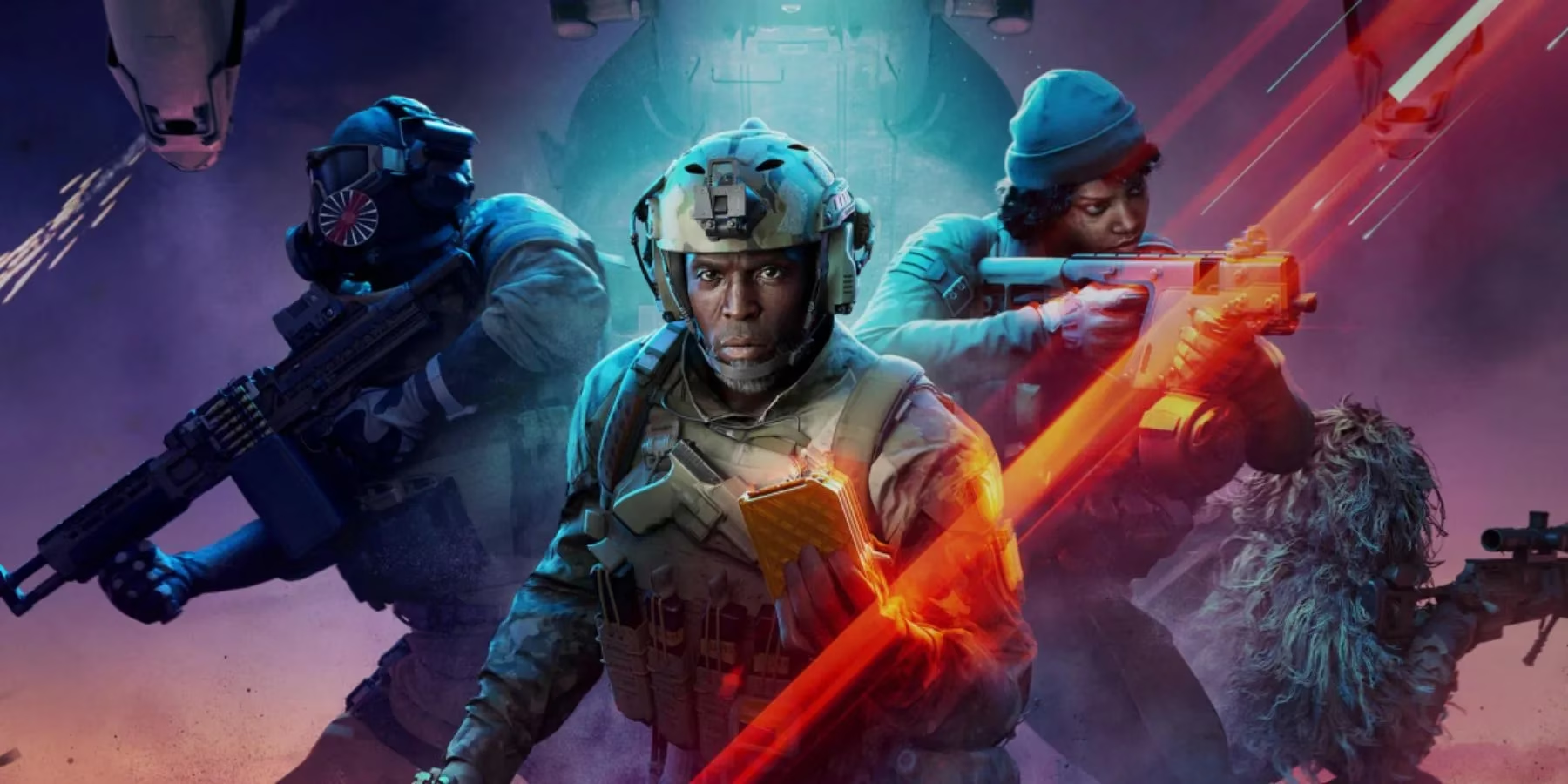
Fast-forward to 2026. Battlefield 2042 has joined the ranks of legendary live-service catastrophes right next to Anthem. The servers still exist, I guess, but logging in feels like visiting a digital ghost town where the tumbleweeds are broken hovercrafts. Meanwhile, the Battlefield community is holding its breath for the next mainline entry, codenamed “Battlefield: Next Chapter” (or maybe just Battlefield 6 if the marketing department can count again). Having lived through 2042’s entire tragicomedy, I’m here to piece together what went wrong — and why I’m cautiously optimistic the new game won’t let a tractor humiliate it.
The launch that broke more than it built
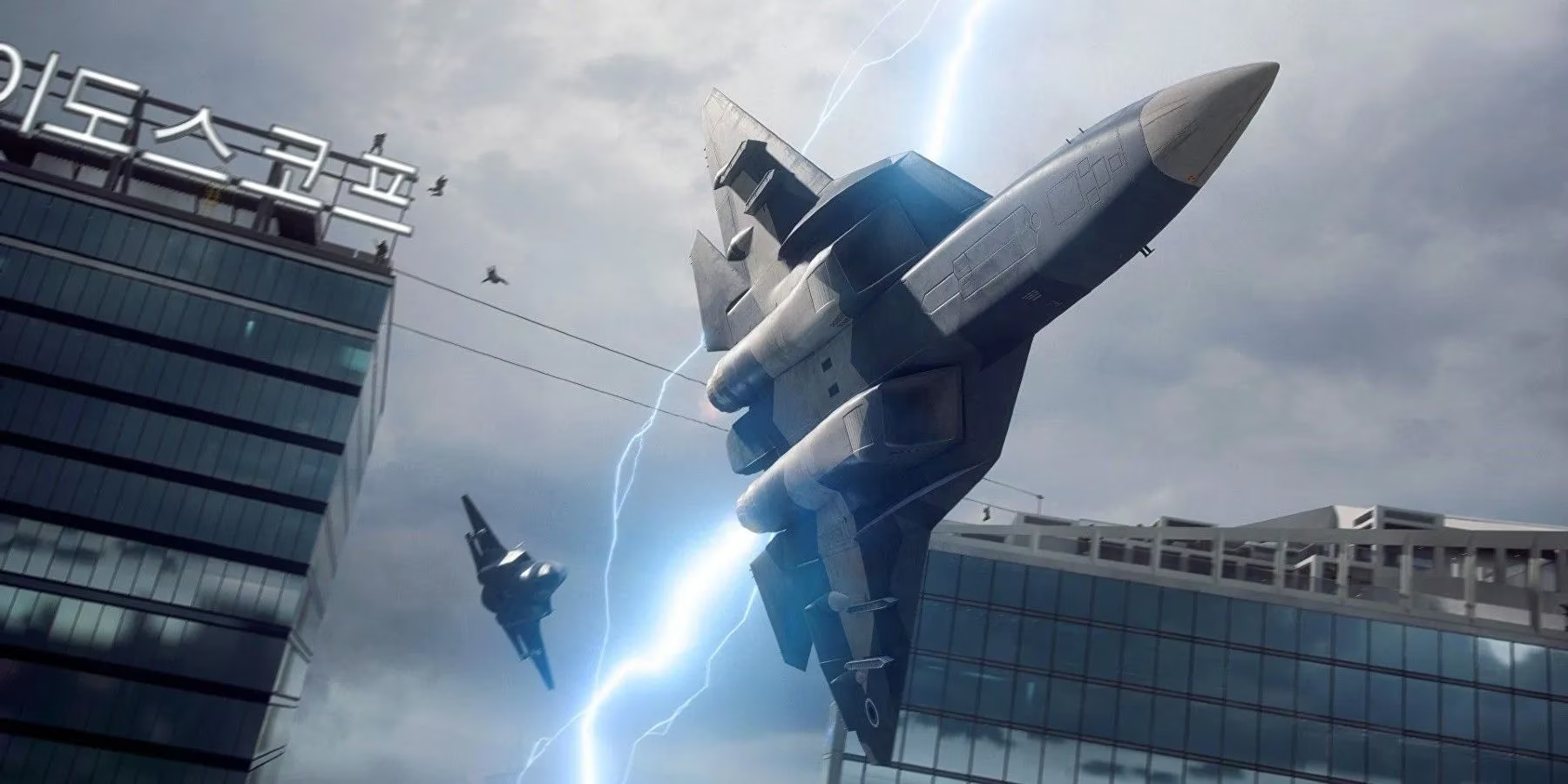
Let’s start with the obvious: Battlefield 2042’s release was a technical apocalypse. 128-player matches, the shiny new selling point, often turned my screen into a PowerPoint presentation. Hit registration was a myth, rubberbanding became a core gameplay mechanic, and I got killed by an invisible C5 drone more times than I care to admit. The whole thing felt like an early alpha accidentally shipped to consumers. DICE issued a blog post in early 2022 promising fixes — better pathing, vehicle rebalancing, more cover — but the timeline was vague, and the patch notes read like a to-do list that should have been tackled a year before launch. By then, the player count had already nosedived so hard that finding a match took longer than my last relationship.
Specialists and maps that hated fun
The specialist system was meant to be an evolution of the class formula, but it turned every match into a cringe-fest of one-liners and clone wars. Instead of a nameless soldier who felt like me, I was forced to play as a quirky operator with a backstory I never asked for. The community screamed for classes to return, but DICE and EA initially chalked it up to “player expectations” — as if expecting basic team dynamics was some fringe demand. Map design amplified the pain: huge, barren landscapes with zero flow, where the only cover was the occasional shipping container and my own tears. Previous games gave us the dense, destructible streets of Amiens or the vertical chaos of Dawnbreaker. 2042 gave me a flat hockey rink with a tornado. 🌪️😐
Portal showed us what we actually wanted
Ironically, 2042’s most beloved feature was Portal — a mode that let us replay remastered maps from Bad Company 2, Battlefield 3, and Battlefield 1942 using the older, tighter gunplay and class rules. Portal was a love letter to the series’ best moments, and it immediately became the only thing keeping 2042 on my hard drive. It proved that the community wasn’t allergic to change; we were allergic to change that threw away everything that made Battlefield special. DICE gave us the tools to recreate the classics, and we happily ignored the base game. If that isn’t a neon sign pointing to what the next title should do, I don’t know what is.
Lessons from a legacy that still lives
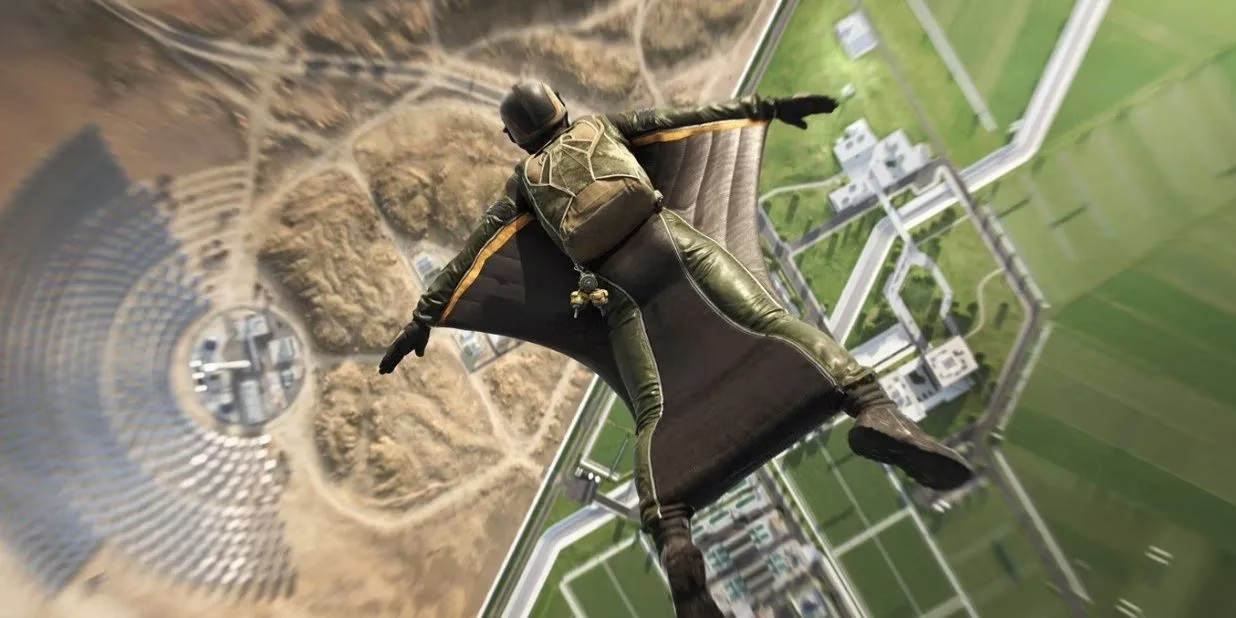
Here in 2026, Battlefield 4 and Battlefield 1 still have dedicated player bases that dwarf 2042’s. I frequently boot up BF1 and get goosebumps from its immersion, the weighty sound design, and maps that tell a story. Battlefield 3 remains the gold standard for gunplay and tight infantry combat. Bad Company 2 is still worshipped for its destruction — entire buildings crumpling felt like a revolution that 2042 mostly forgot. The new game, rumored to launch late this year, absolutely must revisit those roots. I don’t want a hero shooter skin on a Battlefield skeleton. I want mud-caked soldiers screaming over explosions, collapsing bridges changing the frontline, and a sense that every round is a chaotic war movie where I write the script.
There are signs EA has finally internalized this. Insider reports say the next Battlefield is ditching specialists entirely, returning to a grounded class system with distinct roles and no wisecracking superheroes. Leaks point to a modern-day setting (because the near-future gimmick tanked) with a heavy emphasis on destruction, classic-style map layouts, and a scaled-back 64-player cap to avoid another performance trainwreck. The developers have publicly admitted they “learned valuable lessons” from 2042 — a phrase I used to mock, but now, after three years of radio silence and internal studio restructuring, I’m willing to believe they mean it.
The road to redemption
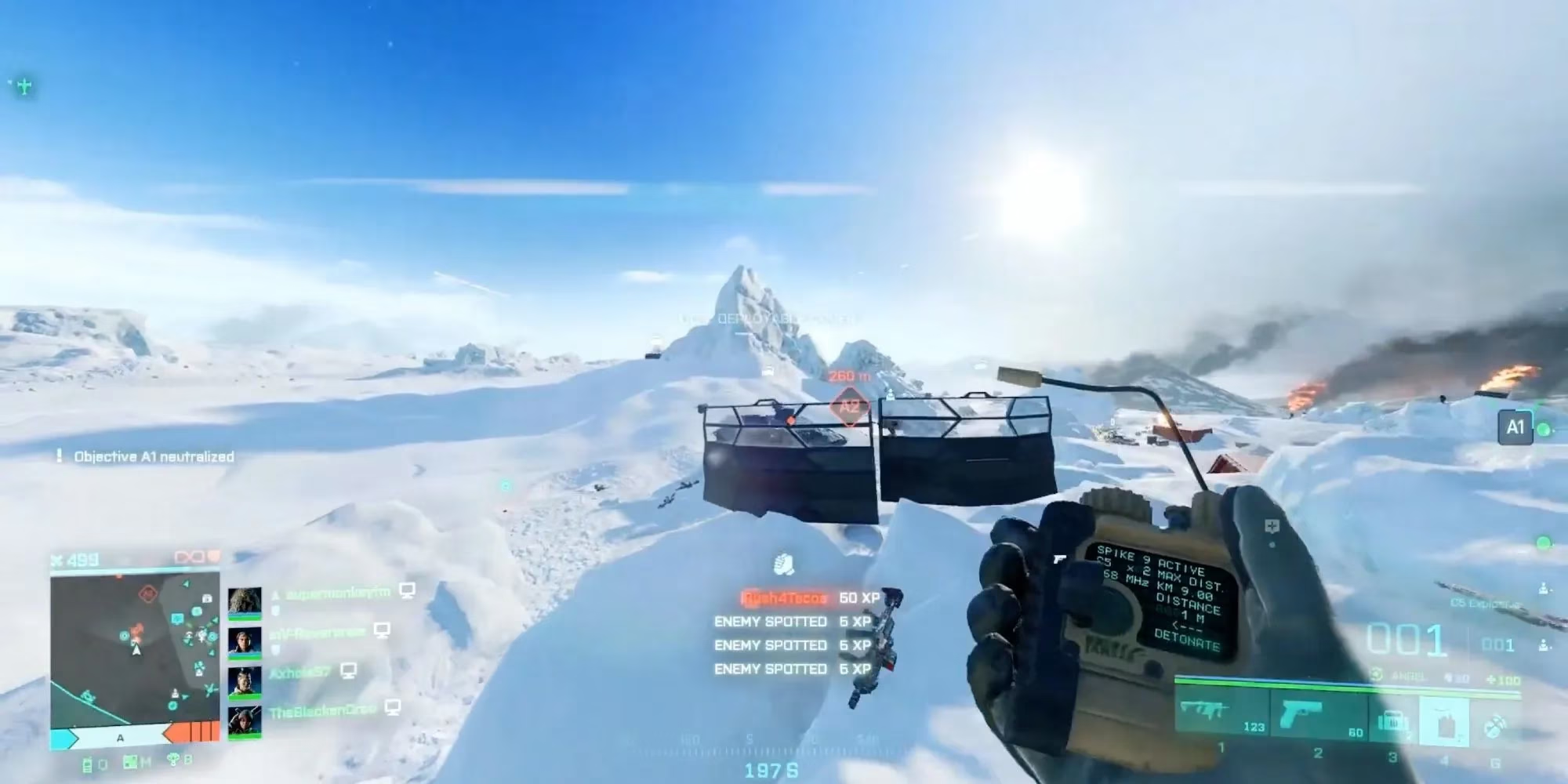
If there’s one thing 2042 taught me, it’s that the Battlefield community is unbelievably patient — but not infinitely so. We weathered the bugs, the missing scoreboard (it took months to add one 🤦♂️), and the gaslighting that blamed Halo Infinite for 2042’s failures. We stuck around because Portal reminded us what the franchise can be. The next Battlefield has a shot at redemption, but only if it trades live-service bloat for substance. Give me tight gunplay, maps with soul, destruction that makes me giggle, and no operators trying to sell me a backstory. Let me create my own “only in Battlefield” moments again — like strapping C4 to an ATV and launching it into a helicopter, something 2042’s marketing teased but the game rarely delivered.
As I stare at my screen in 2026, waiting for the reveal trailer, I can’t help but chuckle at the memory of a farming sim dunking on a triple-A shooter. It’s the kind of absurdity that could only happen in this industry. Here’s hoping the next Battlefield makes that story a relic, not a prophecy. 🌾🔫
Data referenced from Digital Foundry helps frame why Battlefield 2042’s launch felt less like “next-gen scale” and more like a stress test gone wrong: when performance, frame-time stability, and input responsiveness wobble under heavy effects and large player counts, even great sandbox ideas collapse into frustration. Looking back from 2026, that technical debt also explains why players gravitated toward tighter, more readable Battlefield experiences (and even Portal’s classic rulesets), and why the next mainline entry’s rumored focus on a steadier 64-player baseline and stronger optimization could be the real make-or-break factor for restoring trust.