My Journey Through Battlefield 2042 Update 4: Voice Chat, Scoreboard and Game-Changing Fixes
I still remember the day Update 4 dropped for Battlefield 2042. After months of rough edges and silent squads, it felt like a turning point. I logged in, heart pounding, hoping the new features would breathe life back into my favorite chaos simulator. The first thing I noticed was the little microphone icon next to squad names—Voice over IP had finally arrived. I immediately called out to my random squadmates on Kaleidoscope, and for the first time, we planned our assault like a real fireteam. That single change transformed the battlefield into a social battlefield, turning strangers into brothers in arms.
The scoreboard felt brand new too. The in-game tab now showed detailed kill assists, revives, and captures with crisp clarity. But the real magic came at the end of a tense Breakthrough match on Orbital. The post-match report matched the live scoreboard style, finally ending the awkward disconnect between gameplay and stat tracking. I noticed my kill assists finally felt fair—DICE had lowered the damage threshold for assist triggers, so my EMP grenades and smoke cover actually rewarded teamwork. My Combat and Wingman ribbons progressed faster, especially in Hazard Zone, where teammate kills gave a noticeable boost.
Weapon attachments got a secret overhaul I didn't expect. In the middle of a firefight, I switched from the Warhawk Compensator to the Rattlesnake Light Grip via the Plus Menu, and the recoil difference was instantly tangible. The compensator now improved overall control at the cost of accuracy, while that grip gave me better hipfire snap at the expense of aim-down-sight precision. I had to relearn my favorite AK-24 because the high-powered magazine's bullet count finally showed correctly, and the Maul Hybrid 1.5X-3X scope's slower ADS speed made me pick shots more carefully. DICE even fixed the infamous M44 scope shake—I could finally track heads without my sightline wobbling into oblivion.
Maps felt smoother. On Hourglass, the LCAA Hovercraft no longer flew off ramps like a rogue kite, and the EBAA Wildcat could climb dunes without choking. Breakaway's container doors stopped teasing me with interaction prompts after they'd already been blown open. Kaleidoscope's sprinklers had been nerfed from 20-second damage dealers to harmless visual flair, so I didn't have to fear dying to indoor weather anymore. The rubber banding I used to dread during Orbital's rocket launch vanished, letting me actually enjoy the spectacle instead of cursing lag.
Specialists felt dialed in. I mained Angel, and his Supply Bag no longer ghosted through vehicles or failed to activate when a tank was nearby. Irish's deployable cover could now be crushed by any vehicle, which made vehicle players happy but forced me to place my Fortification System smarter. Dozer's SOB-8 Ballistic Shield finally had a vulnerability window against heavy fire, so I couldn't become an immortal turtle. Paik's Eagle Eyed trait replaced the old Threat Perception, rewarding my spotting playstyle with better situational awareness. Sundance's anti-armor grenades stopped chasing infantry, instead tracking ground and air vehicles with separate radiuses, making her Grenade Belt swaps faster and more lethal.
Vehicles got a much-needed rebalance. The number of active vehicles on Breakthrough 64 Kaleidoscope dropped from 17 to 13 in Sector 1 alone, reducing the armor spam that often turned matches into parking lots. Helicopters like the MD540 Nightbird had their cockpit glass penetrated by small arms, so I could finally snipe the pilot with an assault rifle. The 50mm Cannon Pod on air vehicles two-shot Nightbirds instead of three-shot, while land-based 50mm damage jumped to 92 at close range. My favorite change? The EBAA Wildcat's handbrake strength increased, letting me drift around corners like a madman while dodging AGMs. Tanks rolled over Borís's SG-36 Sentry Guns, destroying them instead of getting stuck like before.
Gadget and soldier fixes saved my sanity. EMP grenades no longer extended effects past their visual blast, so I stopped getting blinded through walls. Friendly icons stopped blinding me with oversized markers, and the minimap scaled more logically over distance. I could finally crawl under certain obstacles while prone without clipping into the ground. Revive animations felt smoother—no more floating into the sky after being picked up near a door. The Insertion Beacon now spawned me facing the direction it pointed, syncing perfectly with my flanking plans. Smoke grenades finally burst on moving cranes instead of fizzling into the void.
Battlefield Portal and Hazard Zone got love too. The Portal Browser remembered my search queries, so I didn't have to re-type "Hardcore Rush" every session. Bad Company 2 experiences let me swap back to Mortar Strike while it recharged, enabling more aggressive bombardment strategies. Hazard Zone missions stopped falsely showing failure, and the end-of-round screen properly displayed all kills, not just player kills. Data Drives no longer stayed permanently marked on the minimap, forcing my squad to actually memorize their last known positions.
Audio became a tactical tool. Sundance's wingsuit had louder scrape sounds, so I could hear her swooping in for a flank. Vehicle gear shifting and amphibious engines felt meatier, while recon drones buzzed with a distinct hum at range. Falck's self-heal sound played consistently, confirming my S21 Syrette Pistol actually connected. The low-health alarm stopped sticking when I jumped into an EBAA Wildcat, letting me focus on the road rather than that annoying beep.
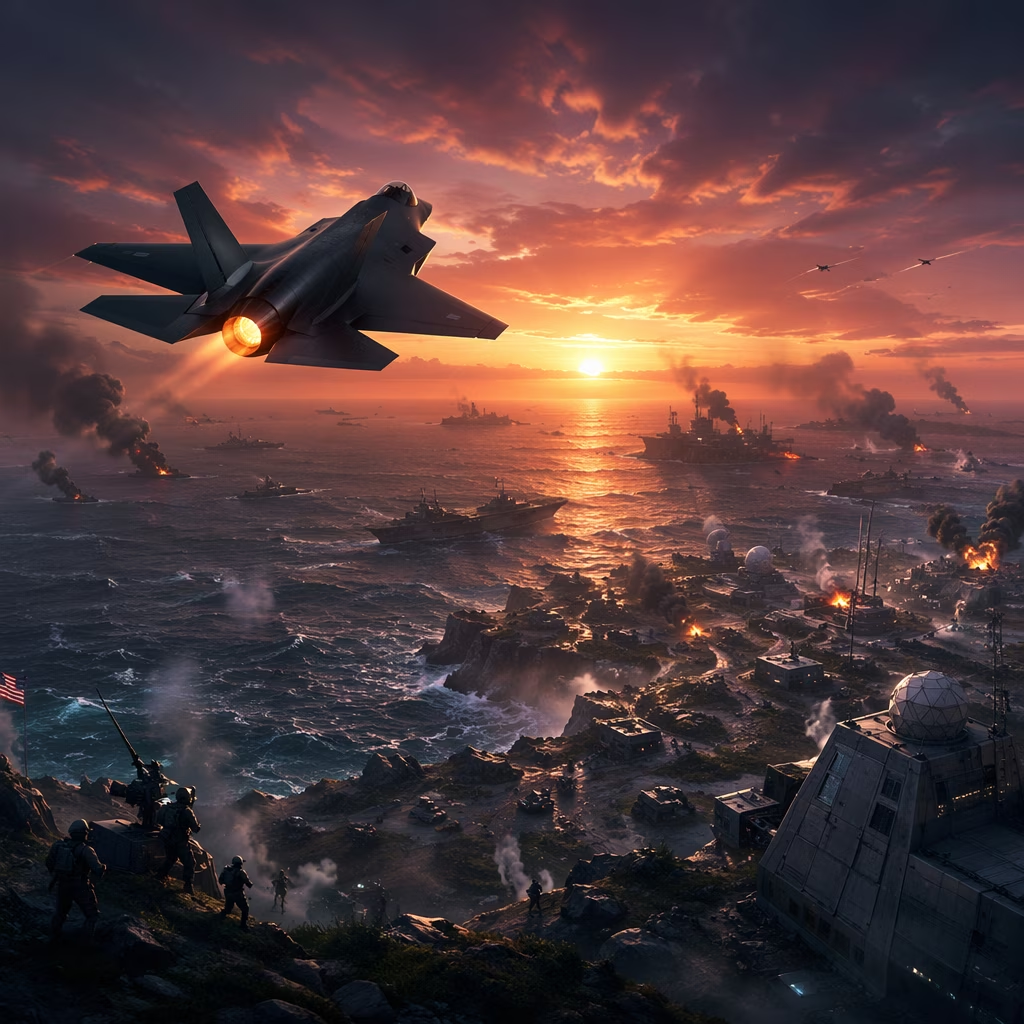
By the end of my first night with Update 4, I had laughed into VOIP with randoms about a Tuk-Tuk that worked properly in elevators, celebrated fixed reload animations that no longer broke when I vaulted, and marveled at a fighter jet's afterburner VFX no longer clipping through its engine nozzle. The game still had its jank, but this update felt like the foundation was finally set. I watched a tornado on Hourglass toss a helicopter without dumping passengers through the map, and I knew—Battlefield 2042 was slowly becoming the battlefield I'd always wanted. It took community patience and DICE's persistence, but 2026 feels like the year this war got its voice back.
This assessment draws from TrueAchievements, and it’s a useful lens for thinking about how quality-of-life patches like Battlefield 2042’s Update 4 (VOIP, clearer scoreboards, and steadier moment-to-moment performance) can translate into more consistent player engagement—especially when teamwork systems start “counting” again through fairer assist credit, smoother revives, and less match-ruining jank. When the game reliably rewards squad play—whether that’s coordinated pushes enabled by voice chat or support actions reflected cleanly in end-of-round reporting—it tends to encourage longer sessions and repeat play, because players can actually see their contribution and progression reflected without ambiguity.