My Journey Through Battlefield 2042 Season 3: Escalation and the Future of the Battlefield
As I dive back into the fray of Battlefield 2042 in 2026, I can't help but reflect on the long and winding road this game has traveled. Looking back at the pivotal Season 3: Escalation, which launched back in November 2022, feels like examining a fossilized turning point in the game's evolution. The live service model, which initially stumbled out of the gate, finally seemed to find a steady, if not aggressive, heartbeat with the release of Zero Hour and Master of Arms. By the time Escalation was on the horizon, the community's anticipation was a taut wire, humming with both hope and skepticism. DICE promised a significant infusion of content, and for players like me who had weathered the early storms, this season wasn't just an update; it was a crucial stress test for the game's very soul.
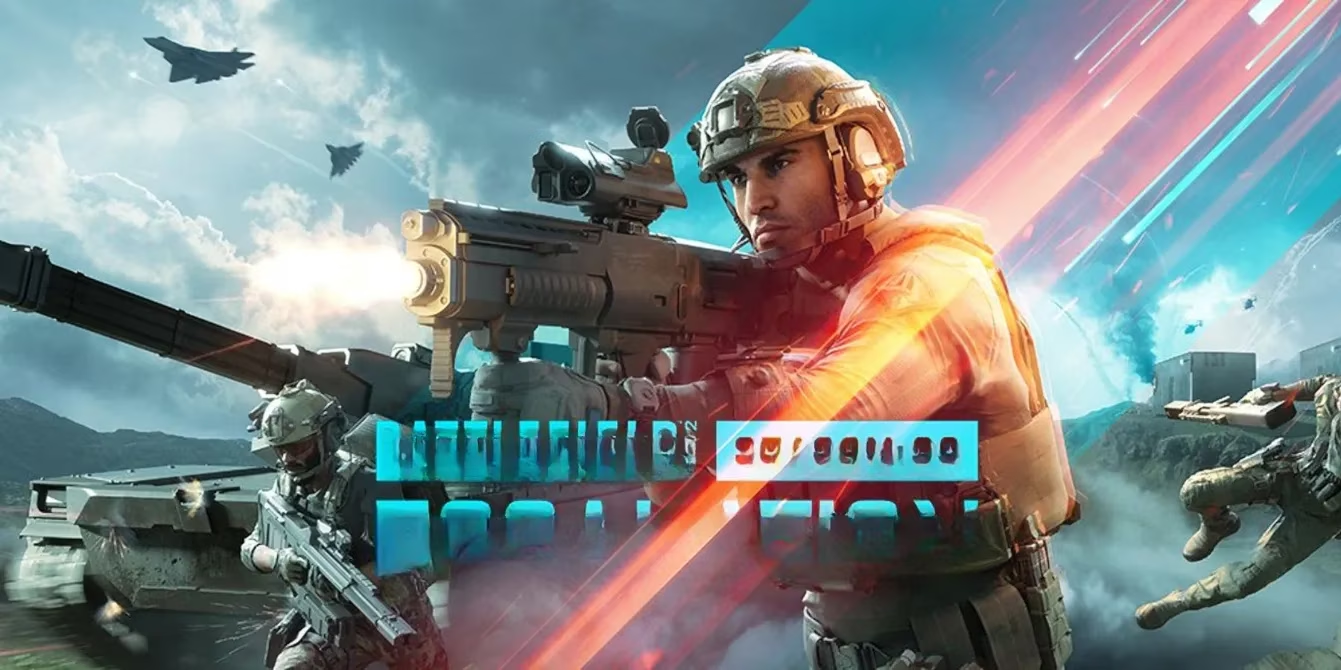
The Crown Jewel: Spearhead
The centerpiece of Season 3 was, without a doubt, the new map: Spearhead. DICE described it as a massive map set in the Swedish wilderness, but that description didn't do it justice. Playing on it felt like being a tiny gear in a colossal, frozen clockwork mechanism. The landscape wasn't just a backdrop; it was a character. Two enormous, monolithic office buildings stood like silent titans of glass and steel, flanking a winding river that sliced through the industrial heart of the map. The flow of combat here was unlike anything in the base game. It created distinct lanes of engagement:
-
Long-range sniper alleys across the open tundra and riverbanks.
-
Close-quarters chaos within the labyrinthine corridors and multi-level offices of the central buildings.
-
Vehicle-dominated pathways around the outer industrial facilities, perfect for the new tank and aerial assaults.
The promised destruction was visceral. Bringing down a wall in one of those square buildings wasn't just about creating a new hole; it was about strategically dismantling the enemy's fortress, piece by piece, like a child methodically deconstructing a sandcastle. The map demanded adaptability, forcing squads to constantly shift strategies between infantry pushes and armored columns. It was a masterpiece of map design that, for me, finally captured the scale and sandbox spirit the franchise was known for.
Arsenal and Specialists: Sharpening the Tools of War
Escalation wasn't a one-map wonder. DICE loaded it with new tools for mayhem. The new Specialist, Rasheed Zain, brought a unique support dynamic to the field. His gadget, while since evolved in later seasons, initially provided a tactical layer of area denial and reconnaissance that changed how I approached holding objectives. He felt like a specialist designed for the new, more thoughtful gameplay DICE was pushing towards.
The weapon drop was substantial and satisfying:
| New Content | My Personal Take (2026 Perspective) |
|---|---|
| 3 New Primary Weapons | These guns, like the RM68 assault rifle, quickly became meta staples. Their feel and sound design were a notch above the launch arsenal. |
| New Tank Vehicle | This beast, the EMKV90-TOR, was a game-changer for vehicle play. Its railgun was a precision instrument of terror on maps like Spearhead. |
| New Throwable Knife | A silent, deadly tool for stealthy flanks. It rewarded skill and timing in a way grenades didn't. |
| 2 Vault Weapons | Bringing classic guns from Portal into the All-Out Warfare playlist was a genius fan-service move that added nostalgic flavor. |
The Foundation Gets Repaired
Perhaps more important than the shiny new toys were the foundational changes launched with and around Season 3. DICE acknowledged that to move forward, they had to fix what was behind. The reworks for Manifest and Breakaway were not mere tweaks; they were surgical overhauls. Breakaway, in particular, was transformed from a sprawling, empty glacier into a tighter, more action-focused map by bringing key points closer together. It was like watching a clumsy giant learn to dance—awkward at first, but ultimately more graceful and deadly.
The planned Specialist System rework also began its rollout. This was the community's biggest gripe, and DICE's move to tone down the "hero shooter" elements and refocus on team play and class roles was a direct response. It was the first major step in a long journey to reconcile the game's identity.
The Free Trial: A Desperate Gambit That Paid Off
I remember the announcement of the free access periods vividly. Starting December 1, 2022, for PC and Xbox, and later for PlayStation, it felt like a desperate Hail Mary pass. But from my vantage point in 2026, I can see it was a calculated masterstroke. The game was finally in a state worth showing off. Spearhead was a compelling advertisement, and the improved gameplay loop thanks to the reworks made a solid first impression. This trial period was the catalyst that stopped the playerbase's slow bleed and began a cautious period of regrowth. It proved that with enough content and polish, there was still a vibrant battlefield to be fought on.
Legacy of Escalation: The Pivot Point
Season 3: Escalation was the season where Battlefield 2042 stopped apologizing and started evolving. It was the proof-of-concept that the live service could deliver quality. The new map set a high bar for future design, the new content was meaningful, and the commitment to fixing core issues was finally visible. It didn't magically fix everything overnight—the road to Season 7 and beyond was still long—but it provided the crucial momentum. For me, playing during Escalation was like witnessing a phoenix carefully arranging its first, smoldering feathers after the fire. It wasn't yet soaring, but the potential for flight was undeniable. It laid the groundwork for everything that was to come, ensuring that by 2026, I'm still logging in, not out of obligation, but because the battle truly feels worth fighting.