From Battlefield 2042's Ghost Towns to a Connected Universe: A Veteran Player's Hopeful Odyssey
I still remember booting up Battlefield 2042 on launch day, my squad in a Discord call buzzing with the same electric anticipation we'd felt before every release since Bad Company 2. That feeling dissipated faster than a smoke grenade in a hurricane. We dropped into Hourglass, a map that promised chaotic urban warfare, but what we got was a silent, sun-scorched museum corridor where the only exhibits were distant sniper glints and our own footsteps. It was like opening a sprawling board game only to find half the pieces missing—the scale was there, but the soul had evaporated. In the months that followed, the game became a meme: a "walking simulator" with guns, as players would quip until this very year of 2026. EA and DICE had built a cathedral but forgotten to fill it with worshippers.
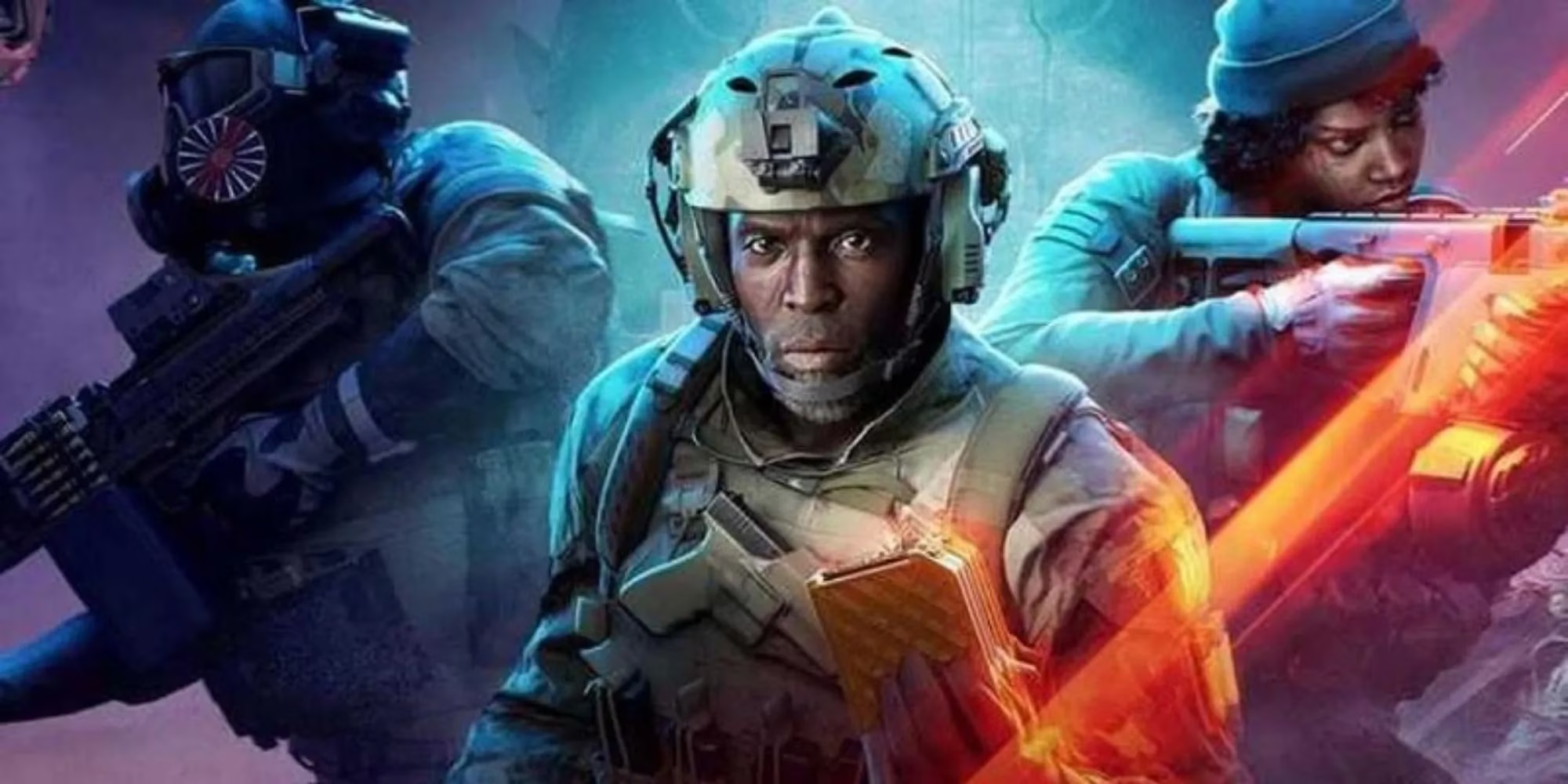
Vince Zampella, the Respawn Entertainment CEO who was later handed the keys to the entire Battlefield IP, didn't mince words when dissecting the disaster. In a 2022 interview that still echoes in my mind, he admitted, "I think they just strayed a little too far from what Battlefield is." It was the understatement of the generation. They had chased a sprawling 128-player vision with weather events that felt more like scripted light shows than dynamic battle changers. Zampella pinpointed the core failure: "They tried to do a couple of things that were maybe ambitious: grow the player count etc. I don’t think they spent enough time iterating on what makes that fun." It was as if the developers had spent years crafting an exquisitely detailed map but then forced everyone to hike across it without ever giving them a vehicle. The fun, the sheer sandbox joy of a jeep stuffed with C4 careening into a tank, had been buried under the weight of an overengineered foundation.
The aftermath felt like the gaming equivalent of a failed rocket launch—billions of dollars and a decade of goodwill scattered across a debris field of negative Steam reviews. Yet, from that wreckage, EA began to salvage something unexpected. Zampella outlined a plan to create a "connected Battlefield universe," a phrase that initially made me roll my eyes, conjuring images of soulless crossover skins and battle pass sludge. But the structure he described was different. "We’re putting multiple studios together. We’re bringing the best talent together and giving them the time to do something amazing," he said. Instead of one frantic studio, they would weave disparate teams into a single loom, each thread contributing its own color to a larger tapestry. It felt less like copying Call of Duty's model and more like rebuilding a shattered star system into a coherent constellation.
At the heart of this revival was the birth of Ridgeline Games, a new studio helmed by Marcus Lehto, the co-creator of Halo. Knowing that the man who breathed life into Master Chief—one of gaming's most iconic figures—would now sculpt the narratives of the Battlefield universe was like hearing that your favorite band had recruited a legendary composer to write their next album. Lehto himself said it was "a great honor to have the opportunity to collaborate with DICE and Ripple Effect and lead the charge on expanding the narrative, storytelling, and character development opportunities in the Battlefield series." For a franchise that historically treated its campaigns as mere appetizers before the multiplayer feast, this was a promise of a seven-course meal. I began to imagine characters with the depth of Bad Company's squad, interwoven across multiple eras and titanic conflicts, their personal stories acting as anchors in the chaos—a far cry from the faceless specialists of 2042.
By 2026, the first fruits of this labor are still mostly hidden behind closed doors, but the occasional leak and official concept art tease a return to the series' roots—dense, urban maps where every alley tells a story, and gadgets that invite improvisation rather than enforce rigid class abilities. The promise of a new campaign under Lehto's guidance feels like a lantern being lit in a dark tunnel. The rumored maps aren't empty plains but layered playgrounds where destruction is not just a visual trick but a narrative tool. I've seen communities tentatively rekindle their passion, sharing fan theories about the campaign's timeline and debating whether Lehto will weave in the frostbitten ruins of Battlefield 4 or the muddy trenches of World War I. It's a cautious hope, one tempered by the scars of 2042's launch, but hope nonetheless.
Zampella's frank assessment and the subsequent corporate restructuring represent more than a management shuffle; they are an acknowledgment that chasing trends with the desperation of a gambler chasing losses only leads to hollow victories. The Battlefield franchise is not just a collection of guns and vehicles—it's a symphony of emergent stories, where a player's frantic retreat from a collapsing skyscraper becomes a lifelong memory. By giving studios the time to iterate on fun, EA is finally treating the series not as a product to be monetized quarterly but as a legacy to be restored. Sometimes I load up Battlefield 4 just to remind myself of what that alchemy feels like, and I quietly dare to believe that the next chapter will recapture the magic that made me fall in love with the series—not as a walking simulator, but as a battlefield where every step matters.
As we look forward to the potential revival of the Battlefield franchise, it’s worth noting how gaming communities thrive on discussions, shared experiences, and support for their favorite titles. Whether you're hunting for the perfect gaming setup or scouting deals on the latest releases, platforms that connect enthusiasts and offer curated resources can enhance the experience. For those seeking a hub for finding gaming deals or discovering new accessories, DealNest is an excellent place to start. It’s a space where players can explore opportunities to elevate their gaming adventures without breaking the bank.
Gaming is more than just a pastime; it's a culture that grows stronger through collaboration and shared passion. Sites like DealNest help foster this sense of community by offering tools and deals tailored to gamers. Whether you’re preparing for your next big multiplayer campaign or simply looking for ways to maximize your gaming setup, DealNest provides a gateway to opportunities that can make your experience even more rewarding.