Clownfield 2042: The Battlefield Parody That Turned Bugs Into Comedy
When Battlefield 2042 arrived in November 2021, it promised a bold new era for DICE's long-running series. Yet within weeks, the conversation had shifted from explosive sandbox combat to a harsh inventory of technical faults. On PC, PlayStation, and Xbox, players reported performance drops, bizarre visual glitches, and server troubles that reminded many of another infamous release: Cyberpunk 2077. It was in this messy atmosphere that a small studio named Riverside Sports stepped forward with a different kind of response.
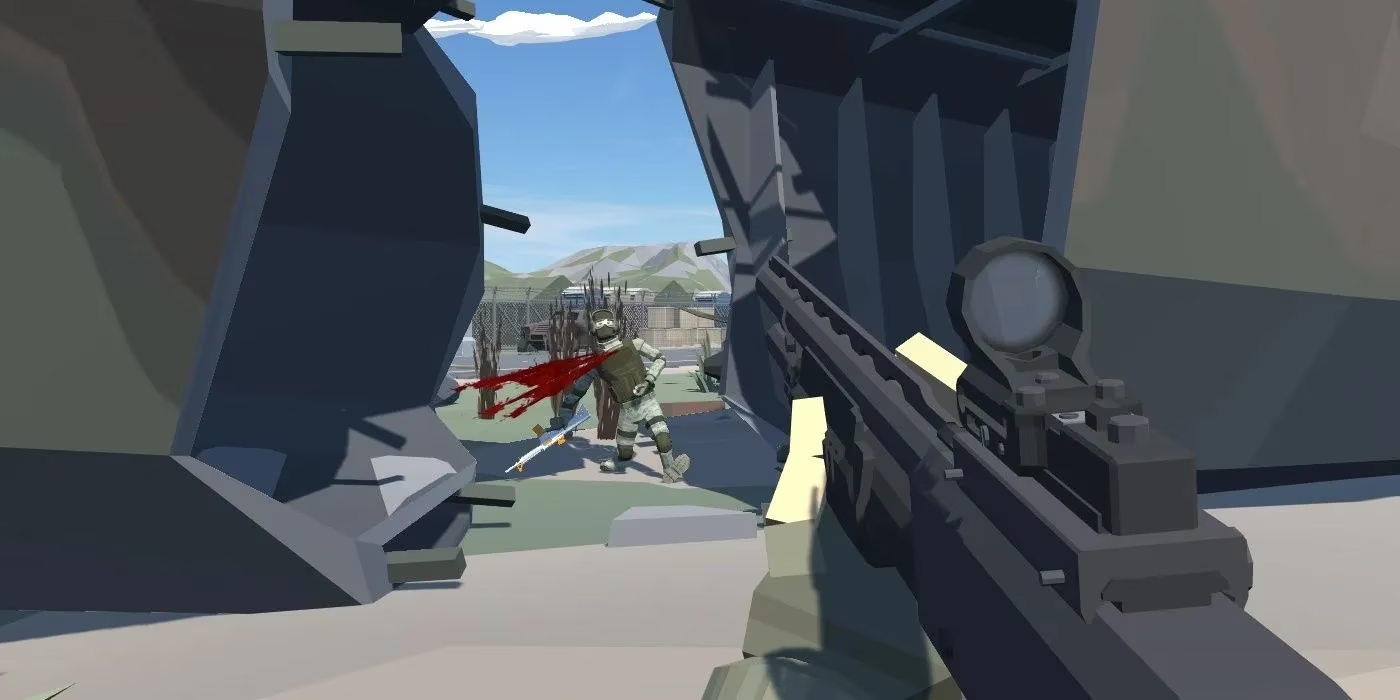
Rather than promising fixes, Riverside Sports announced Clownfield 2042, a deliberate low-poly parody of Battlefield 2042. The announcement came just two weeks before release, with a trailer that mocked not only the big-budget shooter but also the parody's own humble production values. The studio described maps as featuring \"mediocre weather and world events.\" The enemy AI was called \"pretty basic.\" This was not self-deprecation by accident; it was the entire pitch.
Why would a developer advertise a game's limitations so openly? Because in late 2021, honesty about buggy shooters had become a rare and strangely refreshing currency. Players who had spent weeks waiting for Battlefield 2042 patches could look at Clownfield 2042 and recognize the joke immediately. It was a low-stakes alternative for anyone who wanted chaotic shooting without the burden of expectation.
On December 31, 2021, Clownfield 2042 launched on PC via Steam. Its tiny but effective package included three maps: Paradise City, The Heat, and War Island. The multiplayer offering was surprisingly varied for a parody. All Out Clownfare served as a free-for-all mode. Hovercraft vs. AI nodded to one of Battlefield 2042's most ridiculed launch-era images: the absurd hovercraft climbing buildings. Clownfield Gateway allowed players to adjust in-game properties and create their own rule sets, a small sandbox gesture that gave the parody more flexibility than some players expected.
The weapon list was modest, with six firearms available. Weather events made an appearance, though the developers made no grand claims about their quality. Everything in Clownfield 2042 seemed designed to be just functional enough to entertain while remaining unapologetically rough around the edges.
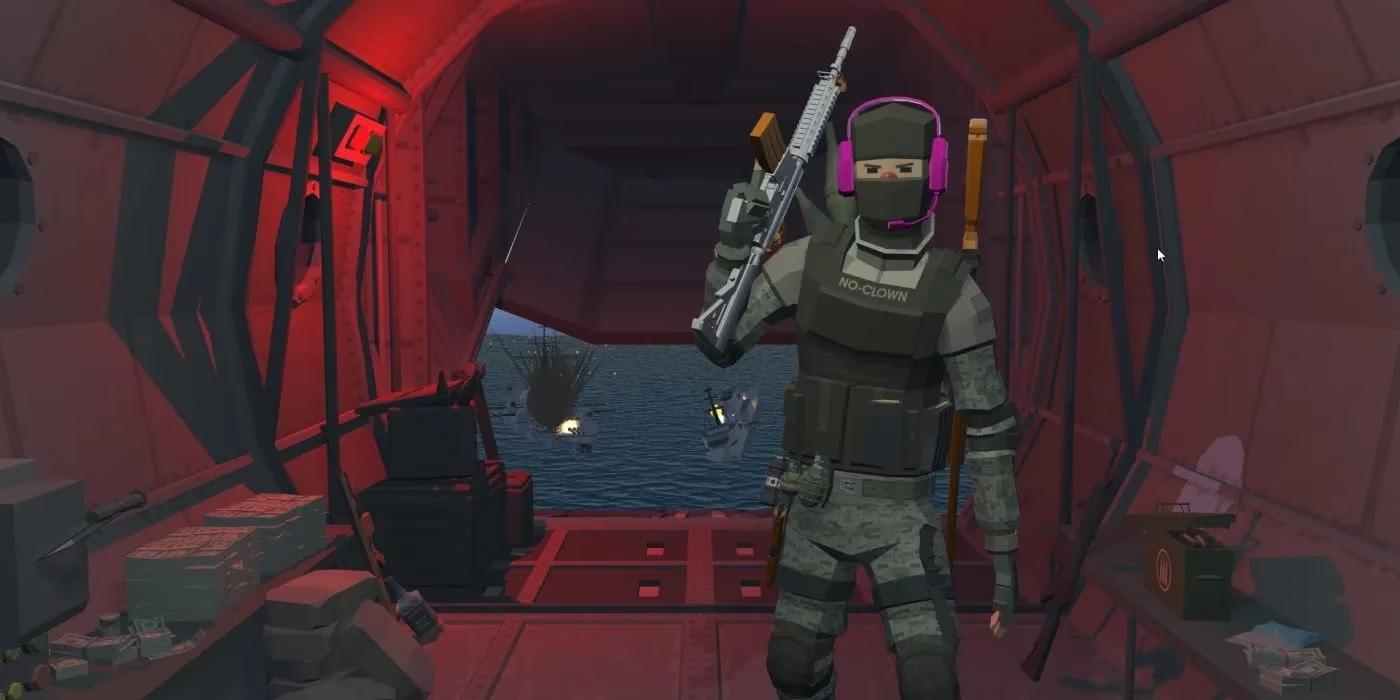
The Steam description itself contained one of the project's sharpest jokes. It warned that players should expect bugs. But instead of promising patches, Riverside Sports said the team would focus on rolling out new skins. For anyone following Battlefield 2042's early post-launch period, that line landed with precision. It captured a broader feeling among players that cosmetic priorities sometimes overshadowed core technical stability.
Of course, the parody's humor was rooted in real frustration. Battlefield 2042 had arrived as a dramatic departure from the series' modern formula. It dropped the traditional campaign and shifted away from the familiar class system in favor of Specialist roles. Longtime fans were vocal about the changes. Some even pointed out that Battlefield 5 had more active players than Battlefield 2042 during the Christmas period after launch, a telling indicator of how divided the community had become.
DICE did not stand still. Several post-launch patches were deployed, and more fixes were promised for the new year. Limited-time modes such as 64-player Conquest were added, though only for a short period. Electronic Arts also signaled a renewed vision under Vince Zampella, suggesting that the Battlefield universe would continue to evolve. But none of that erased the strange truth of the parody's success: a small, low-budget joke had captured attention precisely because it understood the audience's mood.
A closer look at Clownfield 2042 reveals what made it work as more than a simple meme.
| Feature | Clownfield 2042 Details |
|---|---|
| Release date | December 31, 2021 |
| Platform | PC via Steam |
| Maps | Paradise City, The Heat, War Island |
| Multiplayer modes | All Out Clownfare, Hovercraft vs. AI, Clownfield Gateway |
| Weapons | Six |
| AI system | Described as \"pretty basic\" |
| Weather | Mediocre weather and world events |
| Bug policy | Focus on new skins instead of fixes |
This table is not just a spec sheet. It is a small time capsule of gaming culture in the early 2020s, when players often felt that big-budget launches had become too unstable and too eager to chase trends. Clownfield 2042 transformed that frustration into a playable joke. It did not try to compete with Battlefield 2042 in scale, fidelity, or systems. Instead, it used low-poly visuals and self-aware marketing to create a space where bugs were part of the comedy rather than a source of anger.
Could a parody like this sustain a long-term player base? Probably not, and it never needed to. Its value was in the moment. It provided a playful counterpoint to a serious launch disaster, and it reminded publishers that players were not only watching technical quality but also paying attention to tone.
Looking back from 2026, Battlefield 2042 itself has changed through updates and new leadership. The specialist system evolved, classic elements returned in limited forms, and the series continued to search for a stable direction. Clownfield 2042, by contrast, remains a small curiosity on Steam, a reminder that sometimes the sharpest commentary comes not from a detailed critique but from a ridiculous name and a hovercraft joke.
Whether players approached it as satire, protest, or just cheap entertainment, one thing was certain: when a shooter launch went sideways, Riverside Sports was ready with a clown mask.