Battlefield Portal's Untapped Potential: A Time-Bending Legacy Awaiting Revival
In the vast, ever-evolving theater of the Battlefield franchise, where the thunderous echoes of World War II rifles have given way to the silent hum of futuristic drones, there existed a profound disconnect. For years, fans celebrated the distinct eras—the gritty, muddy trenches of 1942, the explosive chaos of Bad Company 2, the modern urban warfare of Battlefield 3, and the speculative near-future of 2042—as isolated islands of memory. There was no bridge, no grand conductor to orchestrate a symphony from these disparate notes of conflict. That is, until the ambitious but ill-fated Battlefield 2042 introduced a mode that was less a bridge and more a wormhole: Battlefield Portal.
Portal emerged not as a mere game mode, but as a promise—a sandbox where the very fabric of the franchise's timeline could be torn and stitched back together by the players themselves. It was a concept as tantalizing as finding a pristine, fully functional Sherman tank parked next to a hovering VTOL jet on the same battlefield. Players were given the keys to an armory spanning a century, able to mix and match soldiers, weapons, and vehicles from four cornerstone titles: Battlefield 1942, Bad Company 2, Battlefield 3, and Battlefield 2042. The potential was staggering: imagine a World War II-era soldier, armed with a trusty M1 Garand, taking a defensive position in a skyscraper from Battlefield 2042, only to be assaulted by a squad of futuristic specialists riding in a vintage Jeep. Portal was designed to be a playground of anachronistic warfare, its community-driven nature meant to generate endless, player-created content.
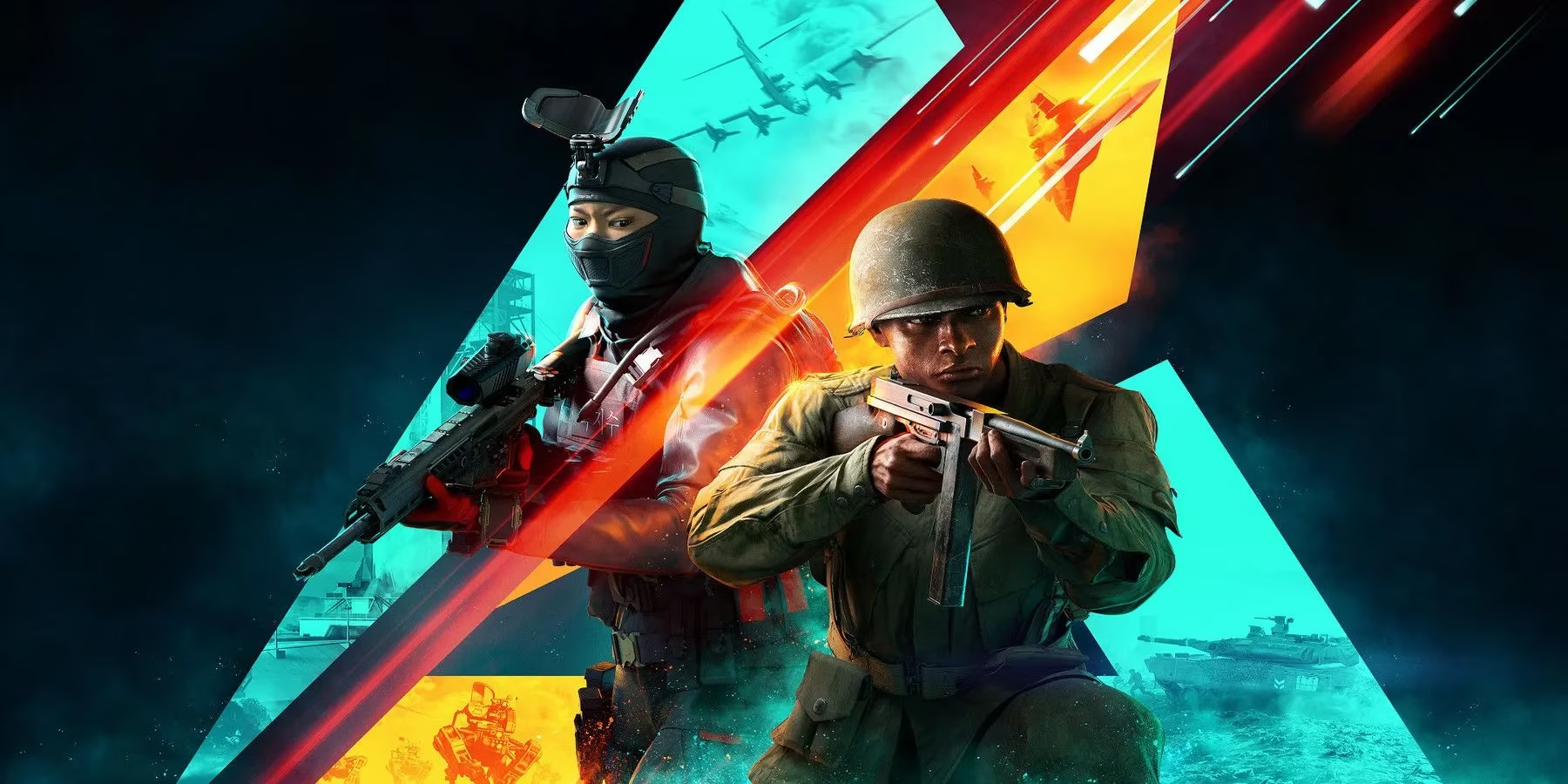
However, this grand vision was launched into a storm. Battlefield 2042's release in late 2021 was, to put it mildly, tumultuous. Plagued by a lack of content, technical issues, and a core multiplayer experience that many veterans felt was a step backward, the game's reputation sank rapidly. The stigma was a thick, toxic fog that enveloped everything the title offered, including the innovative Portal. The mode, which relied on a vibrant and active community to fuel its creative engine, found itself stranded on a deserted island. Player counts plummeted, with Steam figures dipping below a thousand concurrent users within months—a stark contrast to the bustling metropolises of players that previous Battlefield games enjoyed. Portal became like a magnificent, unused library, its shelves filled with infinite stories no one came to read.
Yet, the core idea of Portal remains one of the franchise's most brilliant sparks. Its failure was not one of concept, but of context. It was a spectacular firework launched during a downpour. As we look toward the inevitable next chapter in the Battlefield saga in 2026, the case for Portal's triumphant return is stronger than ever. The next installment will undoubtedly be under a microscope, with a community desperate to see the franchise reclaim its former glory. This provides the perfect, fertile ground for a reborn Portal mode to finally take root and flourish.
A future iteration of Portal wouldn't just be a rehash; it could be an evolution. To truly honor the franchise's legacy, it could expand its temporal arsenal. Imagine integrating the hallowed, destruction-heavy maps from Battlefield 4, the iconic Operation Metro from Battlefield 3 (a map that has become a meme for its relentless choke-point warfare), or even the fan-favorite war stories from Battlefield 1. The logic editor, which allowed for deep customization of rules and win conditions, could be made more accessible and powerful, turning every player into a potential game designer.
Why a Revived Portal Could Be a Game-Changer for the Next Battlefield:
| Feature | Potential Impact |
|---|---|
| Expanded Content Library | Integrating maps/ assets from 6-8 classic titles, not just 4, creating truly limitless combinations. |
| Enhanced Creation Tools | A more intuitive, powerful logic editor and UI to lower the barrier for creative mode design. |
| Official & Community Playlists | Curated, rotating playlists of the best community modes to ensure constant activity and visibility. |
| Long-Term Game Longevity | Player-driven content ensures the game stays fresh for years, far beyond the developer's update cycle. |
| A Living Museum | Serves as an interactive history of the Battlefield franchise, introducing new players to classic eras. |
The community creativity it could foster is immense. Players could craft narrative-driven experiences, competitive tournaments with wild rule sets, or simply chaotic fun modes that become the talk of the community. In a successful, stable Battlefield title, Portal could act as the game's beating heart and its immune system—constantly generating new experiences while protecting the title from content stagnation. It would be the franchise's own "Grand Central Station of Warfare," where soldiers from every era arrive and depart for battles on timelines gone delightfully off the rails.
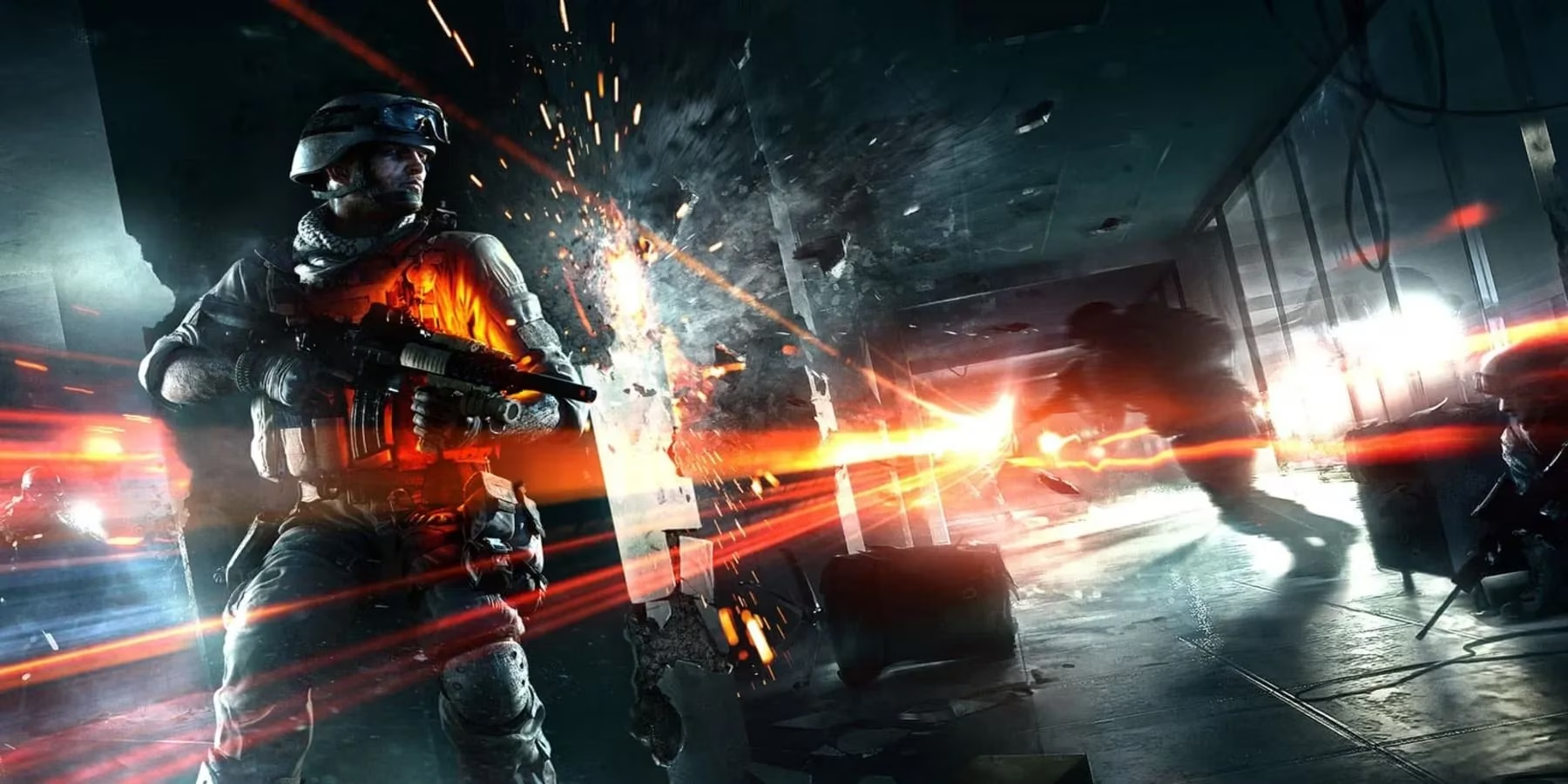
For the developers, a successful Portal would be a masterstroke. It acknowledges and celebrates the franchise's rich history in a tangible, playable way, mending fences with a disillusioned fanbase. It provides a built-in solution for content variety, reducing the pressure to constantly produce new, official maps and modes. Most importantly, it hands the reins of fun back to the players, who have consistently proven to be the best architects of their own enjoyment.
The story of Battlefield Portal is currently one of unfulfilled promise, a ghost ship adrift in the fog of a rocky launch. But its blueprint is too compelling to abandon. The next Battlefield game has the opportunity to be the lighthouse that guides that ship to harbor. By giving Portal a proper foundation—a popular, stable, and well-supported main game—the mode can finally become what it was always meant to be: the ultimate, community-powered celebration of everything that makes Battlefield great. It deserves its second chance, not as a hidden feature, but as a flagship pillar of the Battlefield experience in 2026 and beyond. The potential for a time-bending legacy awaits, ready to be revived by a community eager to write its own history of warfare.