Battlefield After 2042: Will EA Repeat Medal of Honor's Fate?
I still remember the first time I dropped into Battlefield 2042. I had played since Battlefield 1942, so I expected chaos, teamwork, and those only-in-Battlefield moments. Instead, I found empty-feeling maps, Specialists that made my squad feel like a group of strangers, and servers that seemed to fight me more than the enemy did. Was this really the game that was supposed to carry the franchise forward? That question haunted me then, and in 2026, it still echoes whenever I think about how close Battlefield came to vanishing.
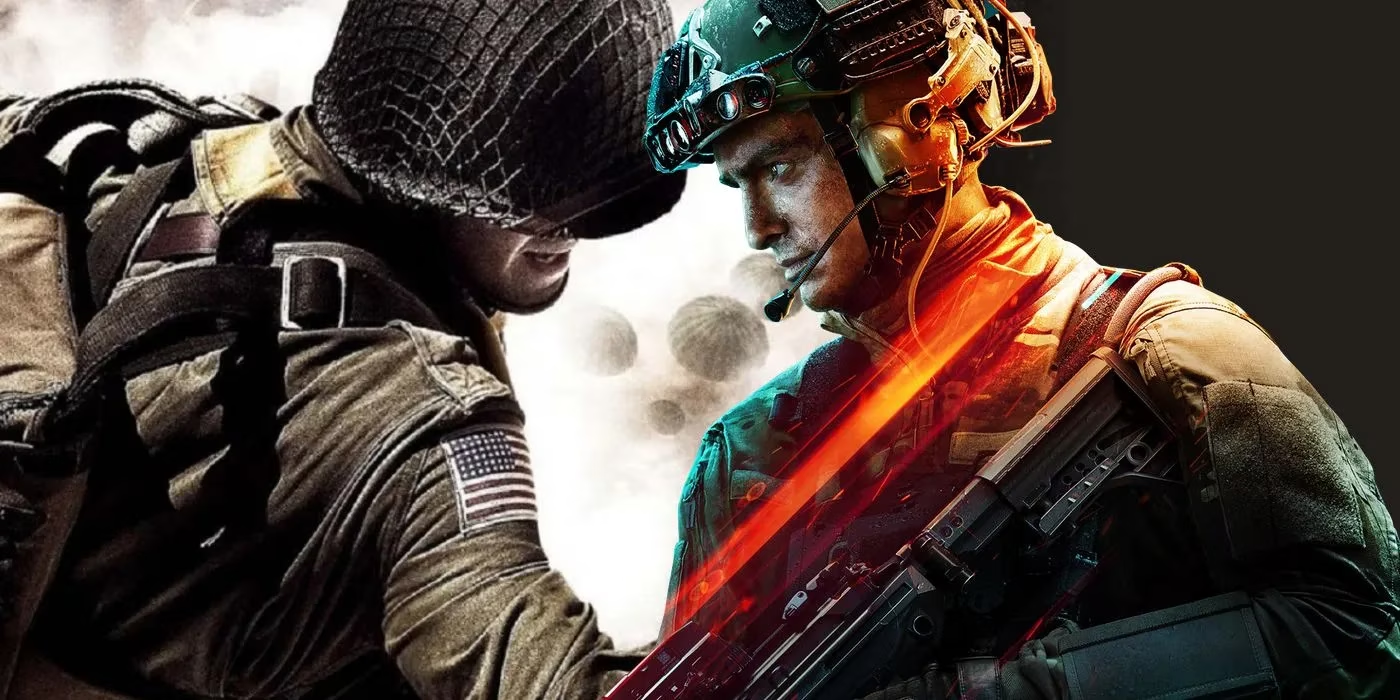
Fans began to worry that EA might stop Battlefield the same way it stopped Medal of Honor. The negative reaction to 2042 was brutal. Players and critics complained about a lack of polish, missing features, and changes to the series' core formula. Multiple fixes arrived, but the problems kept piling up: new mechanics frustrated veterans, servers remained unstable, and the player count was cut in half. When a game loses half its audience quickly, it is not just a bad launch. It is a warning. 🎮⚠️
I could not help but look back at EA's history. EA had abandoned Medal of Honor almost as soon as the series turned downward. It also left Star Wars Battlefront suspended with no clear plans for a new one. If EA had done that before, why would Battlefield be safe? Was the franchise too big to fail, or was that just wishful thinking?
Medal of Honor began in 1999 with Steven Spielberg. He wanted a first-person shooter in the spirit of Saving Private Ryan, a game that captured warfare with realism. DreamWorks Interactive got as close as the technology allowed. The game succeeded, and EA published future entries starting in 2000. Sequels sold decently, but their tone and style fluctuated. Medal of Honor was rooted in the past and realism, yet its gameplay never felt consistent.
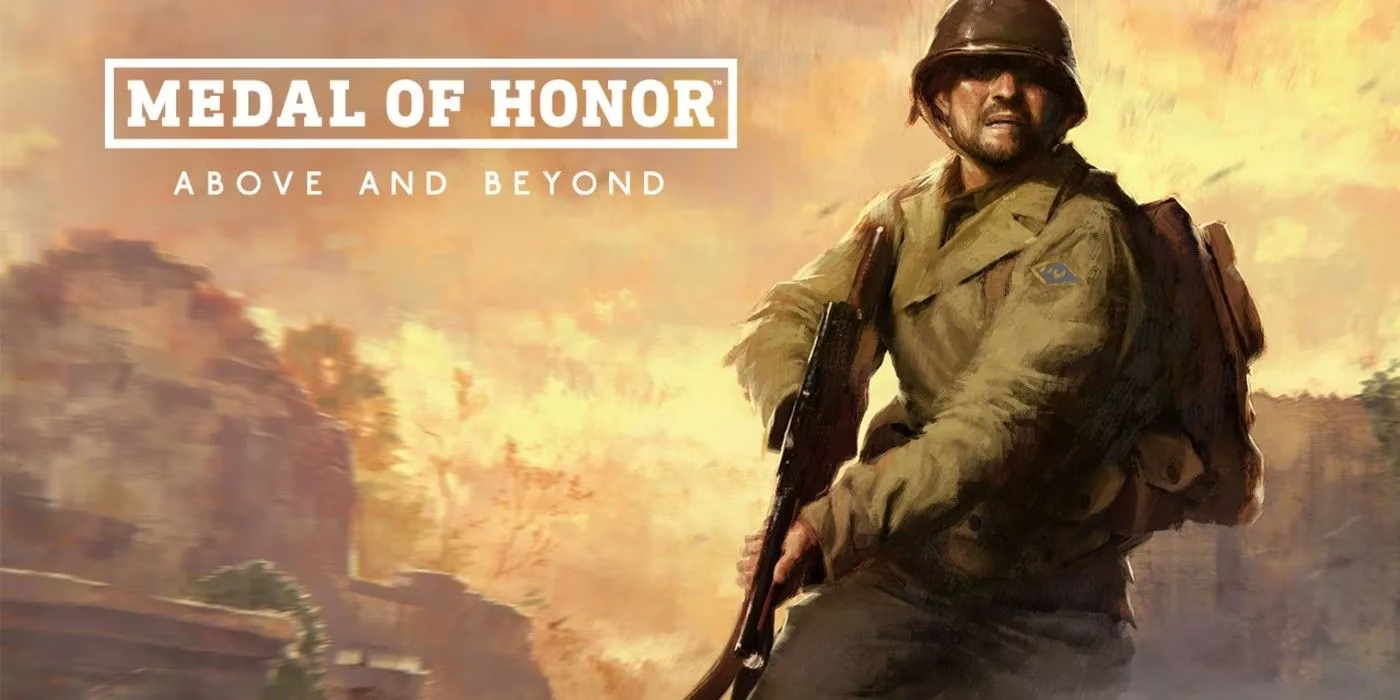
Meanwhile, EA created Battlefield while working on Medal of Honor. Battlefield 1942 became popular because it had a distinct identity: large-scale multiplayer combat. Medal of Honor fell to the wayside as Battlefield rose. Former Medal of Honor developers left EA, formed Infinity Ward, and created Call of Duty in 2003. That rival would dwarf both franchises. Call of Duty started as a Medal of Honor-esque WWII experience, then pivoted to modern combat and multiplayer. Medal of Honor tried to follow in 2010 and again in 2013, but it could not match Call of Duty's scale or polish.
That history feels uncomfortably relevant. In recent years, EA has become known as the center of microtransaction controversies. Ultimate Team modes, loot boxes in Star Wars Battlefront 2, and pay-to-win concerns gave EA a reputation that amplifies every mistake. Battlefield 1 was excellent and took players to World War I, but it launched with few maps and added more through paid DLC. Battlefield V strayed too far toward Call of Duty's style. Then Battlefield 2042 replaced classes with Specialists, weakening the franchise's focus on teamplay and cooperation.
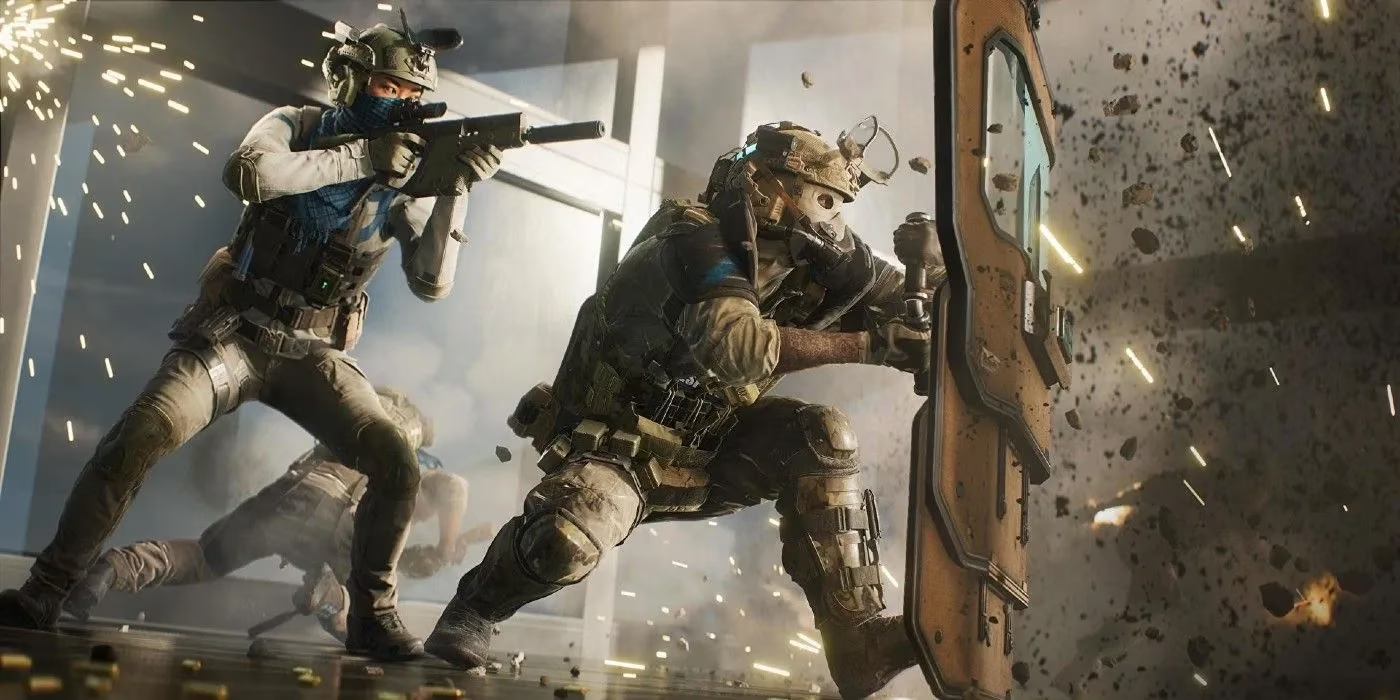
I saw the worry everywhere. Reddit user OkVillage2 summed it up: EA might scrap Battlefield like it did Medal of Honor. Both franchises hit their lowest point after abandoning core tenets. Medal of Honor shifted to modern combat and multiplayer. Battlefield leaned into hero-shooters and battle royale-style modes, areas where Call of Duty already dominated. When you chase a rival by copying it, do you not risk losing the very identity that made you special?
Yet 2042 was not the end. Battlefield still had a distinct identity. EA announced plans for a story-driven Battlefield universe, with Respawn head and former Call of Duty creator Vince Zampella steering it. Ending the series after one failure would not have made sense. 2042 also sold incredibly well. It had the second-best launch in series history, even with Call of Duty: Vanguard releasing at the same time. EA began production on another Battlefield game instead of another Star Wars Battlefront, which suggested the series was safe for now.
By 2026, that 'for now' has become a cautious reality. New Battlefield projects and community testing through Battlefield Labs have kept the name alive. I have spent time in those tests, and I feel the old spark when a squad finally works together. But I also remember 2042. The lesson is not that Battlefield died. The lesson is that it almost did, and that EA cannot afford another identity crisis. If the next game forgets why we fell in love with Battlefield, will players give it another chance? I hope we never have to find out. 🕹️