Battlefield 6's Identity Crisis: Can It Escape the 'Santa with a Rifle' Curse?
The year is 2026, and the gaming world is still reeling from the announcement that sent shockwaves through the community: a coalition of four iconic developers under the banner of Battlefield Studios has unveiled the first pre-alpha footage of the next mainline Battlefield title. The brief glimpse, dripping with a gritty, modern warfare aesthetic, has fans drawing immediate comparisons to the beloved Battlefield 3, heralding a potential 'return to roots.' But beneath the surface of this hopeful homecoming, a specter from the past haunts the conversation. It's not a ghost, mind you, but a jolly old man in a red suit. The controversy over Battlefield 2042's more... festive cosmetics, particularly the infamous Santa Claus skin, has left a permanent mark. As the industry marches ever onward with its live-service models, the community is left with a burning question: will Battlefield 6 finally learn from its predecessor's missteps, or are we destined for another season of tactical tinsel?
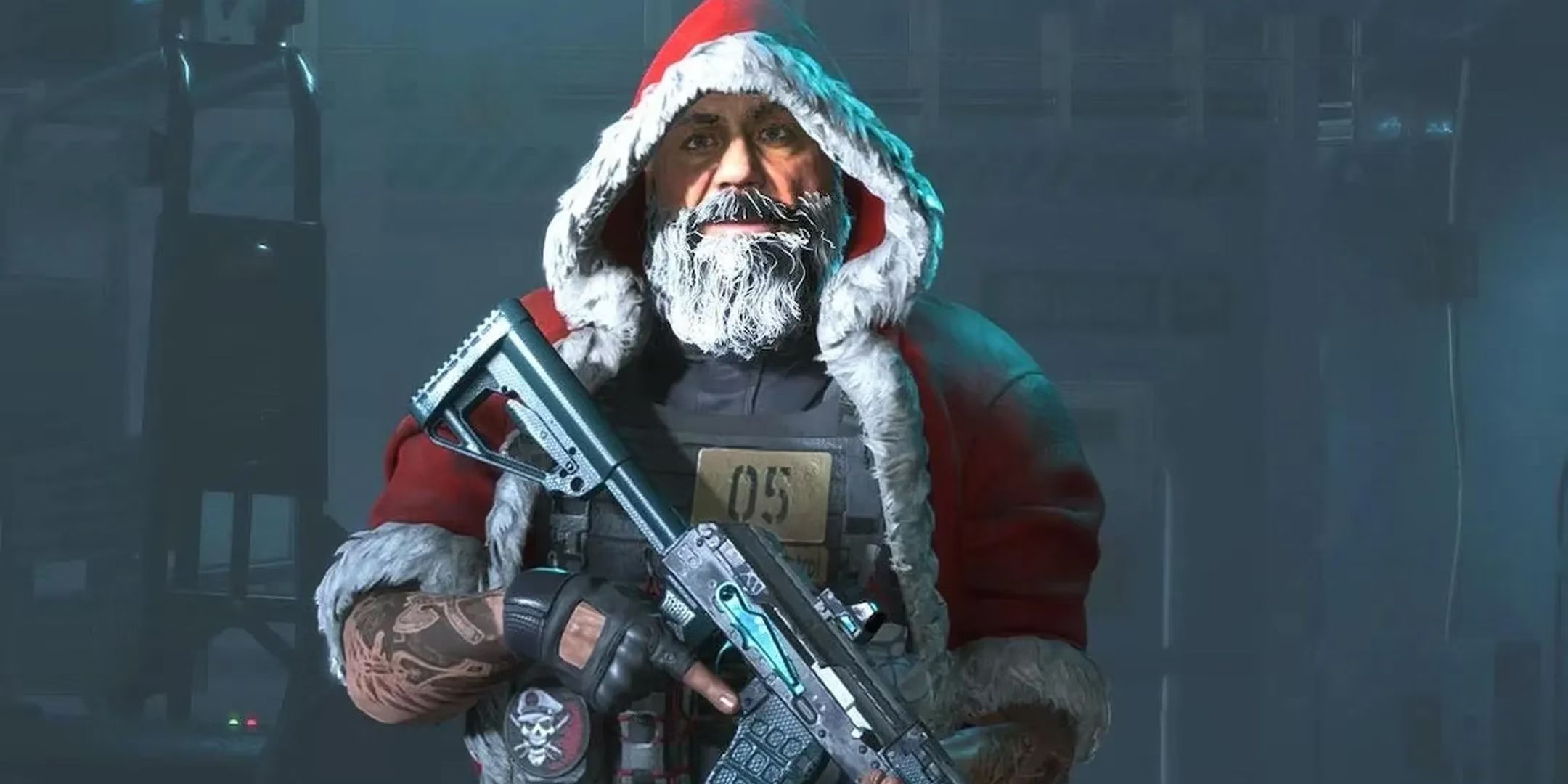
Let's face it, the trend of outlandish skins has become as ubiquitous in modern shooters as respawn timers. In the wake of Fortnite's colossal success, even the once-stoic Call of Duty has embraced the chaos, with Activision's initial fears about a 'too outlandish' Zombies mode seeming quaint in hindsight. The formula is now standard: a battle pass, an in-game storefront, and a steady drip-feed of crossovers and silly skins. It's a profitable machine, but one that often grinds against the very identity of a military shooter. The core of the Battlefield community's plea is simple: they want their game to feel like a war, not a carnival. Following the teaser, one fan's plea on the Battlefield subreddit captured the collective sentiment perfectly: "I hope they keep the character designs true to the military setting and find some way to make money other than releasing clown skins."
The comments section became a chorus of agreement. Players aren't necessarily against monetization—they understand it's the reality of modern game development. What they crave is thematic integrity. Cosmetic options like authentic weapon camos, different glove or helmet skins, or variations on realistic military gear are met with enthusiasm. These are changes that enhance immersion rather than shatter it. But is it really so hard to imagine a world where a military shooter looks and feels like a military shooter? Apparently, for some publishers, the allure of a neon-clad operator is just too strong to resist.
So, what's the solution? The community, ever resourceful, has proposed a few intriguing ideas. The most popular suggestion is elegantly simple: a toggle. One user put it bluntly, "If they do decide to add the funky weird skins in, at LEAST give us the option to toggle them on or off if we don't want to ruin the immersion." The sentiment was echoed with fervor, with another user even offering to pay for the privilege of a cleaner visual field. Imagine that—players willing to spend extra money just to not see something! This feature would create a beautiful compromise. Players who enjoy expressing themselves with wacky outfits could do so freely, while those who prefer a grounded, immersive experience could flick a switch and see only the default or thematically appropriate skins on their opponents and teammates. It's a win-win that respects both playstyles.
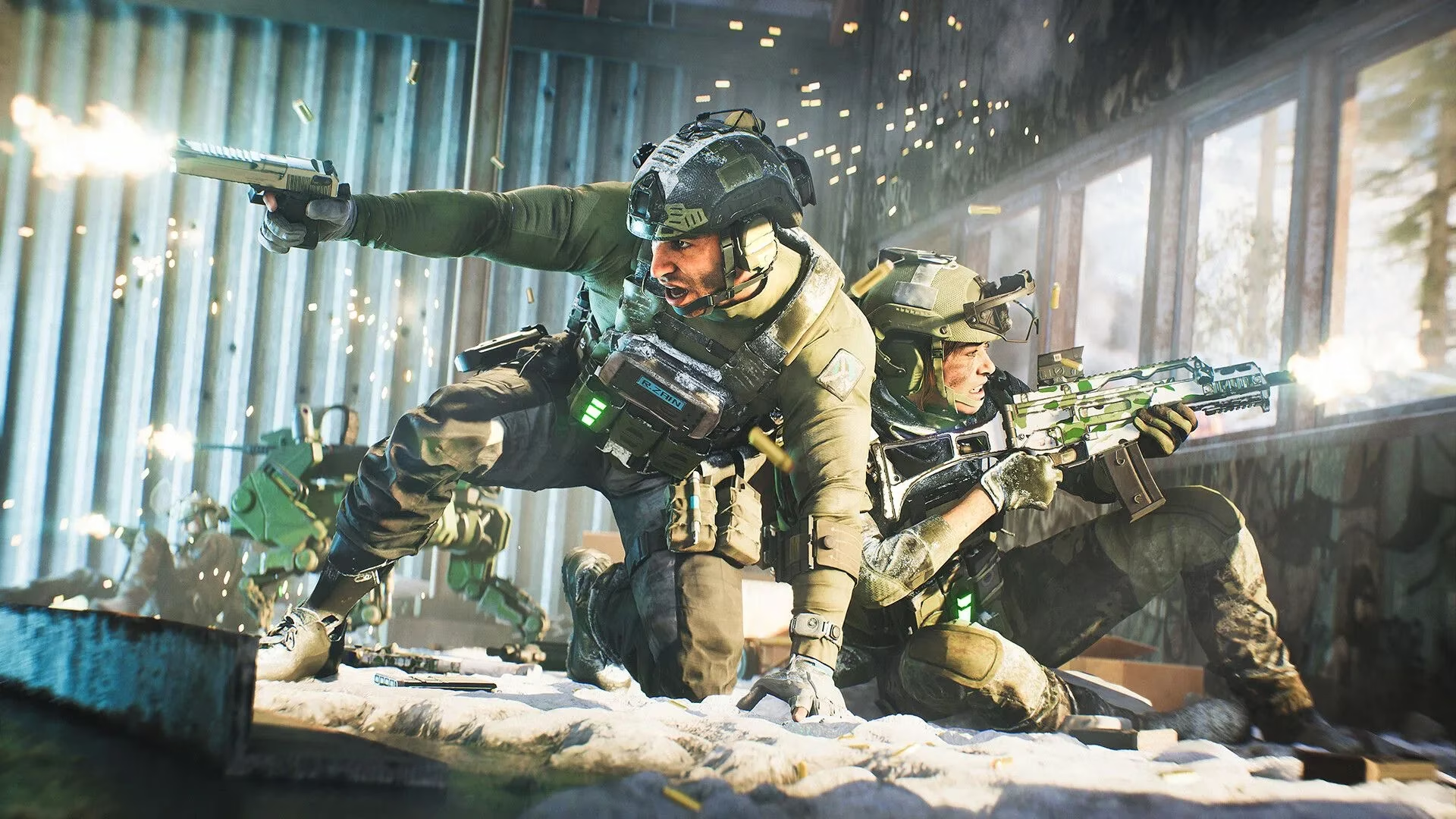
Another, more radical proposal harkens back to a bygone era: the return of paid expansion packs. One comment passionately argued for ditching the "miasma of cosmetics" in favor of substantial, paid content drops containing new maps and modes. The response was telling: "I will GLADLY pay for maps and modes if it means I don't have to see some neon camo'd clown show bullsh*t." This taps into a nostalgic desire for tangible, gameplay-focused content. However, this path is fraught with its own dangers, dangers the industry spent years learning to avoid. Paid map packs famously splintered player bases. Those who couldn't or wouldn't pay were relegated to the vanilla maps, while new maps often became ghost towns if the DLC didn't sell well. It created a frustrating, fragmented experience that the shift to free maps and cosmetic monetization was designed to solve. Is the community so desperate for immersion that they'd willingly return to those divided days? It seems some would.
The debate highlights a fundamental tension in 2026's gaming landscape:
-
The Business Model: Live-service, cosmetic-driven revenue is proven, stable, and expected.
-
The Artistic Vision: A game's tone, atmosphere, and immersion are critical to its identity and fan loyalty.
Can these two forces coexist peacefully in a game like Battlefield 6? The skin toggle seems like the most pragmatic middle ground. It allows the business model to proceed unabated while giving players agency over their own experience. Paid expansions, while appealing in theory, feel like a relic for a reason. The industry has largely moved on from that model because its downsides were so significant.
Ultimately, the ball is in EA's and Battlefield Studios' court. The pre-alpha footage has stoked the fires of hope for a classic Battlefield experience. The community has clearly, and repeatedly, voiced its preferences. Will the developers listen, or will the specter of monetization override thematic consistency? Only time will tell if the battlefields of the next game are populated by gritty soldiers or by a festive brigade led by Saint Nick himself. The choice they make will define not just the game's visual style, but its very soul. After the lessons of 2042, one has to wonder: how hard is it to just say no to the clown suit?