Battlefield 2042’s Map Overhaul: From Empty Spaces to Refined Combat
When Battlefield 2042 stormed onto the scene in late 2021, it carried the weight of enormous expectations. Fans had craved a return to the series’ signature large-scale warfare, and the promise of 128-player matches on sprawling maps seemed like the natural evolution of that dream. Yet, almost immediately, what was meant to be the game's greatest strength became its most glaring flaw. The vast landscapes, designed for epic encounters, often turned into empty wastelands where players spent more time running than fighting. How could a title so heavily focused on scale get the fundamentals of map design so wrong?
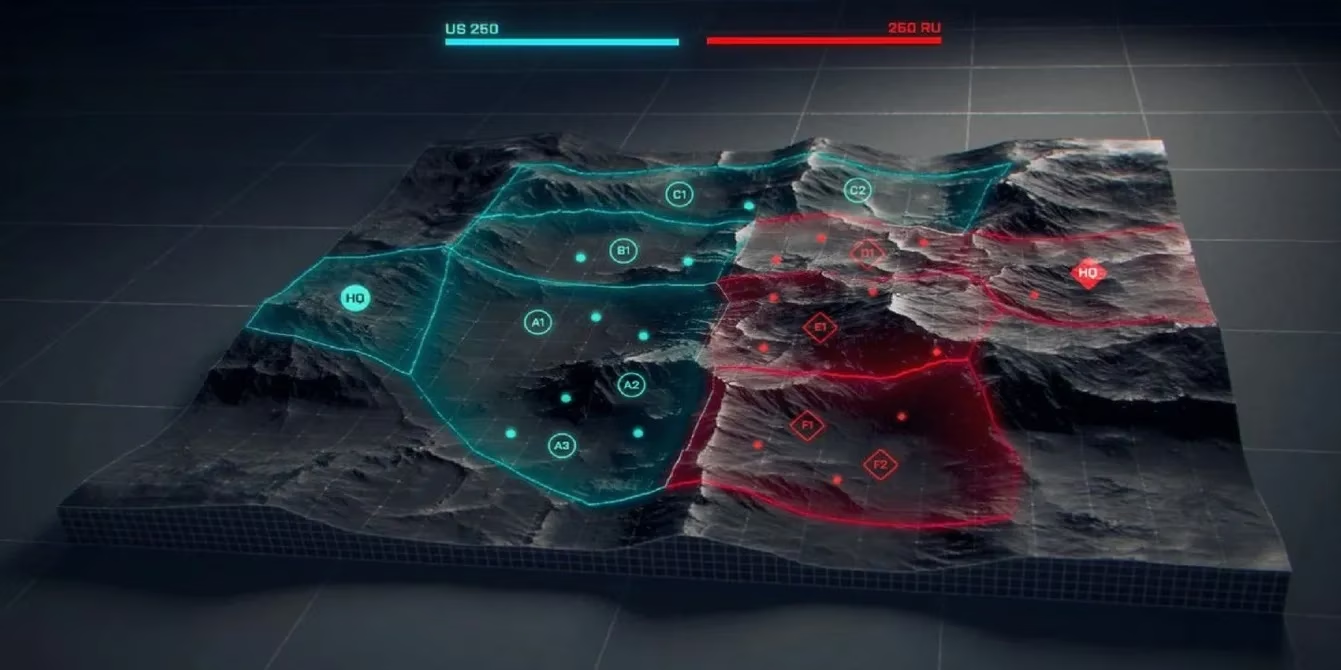
The controversy was tangible from the beta phase. Testers reported endless stretches of barren terrain with little cover, capture points too far apart, and a pervasive sense of aimlessness. When the full game launched, these complaints calcified into a widespread verdict: bigger didn’t mean better. The 128-player count, a headlining feature on PC and current-gen consoles, ironically made the emptiness more pronounced.
DICE, the developer, had initially planned to offset these voids with bots, but even automated soldiers couldn’t mask the deeper design problem. The maps themselves were not crafted for the player density they hosted. In a candid blog post released shortly after launch, the studio acknowledged that “bigger maps don’t always equate to more freedom or fun.” That admission, though late, signaled a pivotal shift.
The developer laid out a multi-pronged reimagination of its flagship mode, Conquest, and the infantry-focused Breakthrough. First, future maps would be scaled down. The obsession with size would give way to deliberate pacing and meaningful encounters. Second, for 128-player lobbies, DICE considered reducing the number of sectors and capture points—a direct response to the scattered, disjointed flow players loathed. But perhaps the most intriguing idea was a change in map geometry. Instead of square arenas that encouraged wide, looping flanking maneuvers, the team proposed rectangular shapes. This simple tweak promised to funnel action forward, creating clear frontlines rather than a chaotic ring-around-the-rosy.
Vehicle balance also came under the microscope. The sheer volume of tanks, helicopters, and hovercrafts on certain maps trivialized infantry play, so DICE began reviewing the type and number of vehicles per map. Their goal was not to strip away vehicular warfare but to ensure every foot soldier had a purpose beyond being a target.
Would these changes be enough? The community remained skeptical. By early 2022, the player count on Steam was already dwindling, with veterans flocking back to Battlefield 4 and Battlefield 1. EA denied that Halo Infinite’s free-to-play multiplayer—launched mere days earlier—had stolen its thunder, but the contrast in reception was stark. Halo offered tight, polished arenas; Battlefield offered vastness without substance.
Yet, the battle wasn’t over. As we look back from 2026, it’s clear that DICE’s post-launch roadmap was more than damage control. The rectangular design philosophy became a cornerstone of subsequent map releases. The first reworked maps, like Renewal and Breakaway, arrived with tighter capture zones, additional cover, and revised sightlines. Traversal options multiplied, with ziplines and vehicle call-ins strategically placed to cut down the dead time between objectives. The intensity that fans craved—those moments of desperate defense and coordinated pushes—finally began to surface regularly.
Later seasons introduced maps such as Exposure and Stranded, which embodied the smaller, more vertical philosophy from the start. Their layouts dispensed with the empty plains of the launch era in favor of multi-level combat zones. In Breakthrough, sector sizes were trimmed, forcing concentrated firefights that recalled the chaos of Operation Metro but on a larger canvas.
One might ask: did the 128-player dream survive this overhaul? It did, but in a wiser form. By 2024, DICE had implemented dynamic player caps that fluctuated based on map layout and mode, refusing to cram the maximum count into spaces that couldn’t support it. The result was a game that felt both massive and manageable—a balance that seemed unthinkable in 2021.
Looking back, Battlefield 2042’s map controversy serves as a case study in the peril of prioritizing numbers over nuance. The initial vision of square-shaped, ultra-large maps promised boundless freedom but delivered isolated players wandering in a desert. Through iterative redesigns, the shift to rectangular flow and smarter sector placement rekindled the series’ core fantasy: organized chaos. The game’s journey mirrors the very frontlines it depicts—messy, contested, but ultimately pushed forward by a persistent willingness to adapt.