Battlefield 2042 Still Has Hope: A 2026 Look Back
I still remember the whiplash. In late 2021, Battlefield 2042 arrived after one of the most promising beta periods I had seen in years. The four-day test was limited to Conquest on Orbital, yet it felt like the future of the series: massive battles, wild weather, and the promise of all-out warfare. EA even called it the most successful early access event in Battlefield history. Then the full launch landed, and the dream cracked. Performance issues, connection problems, glitches, and the sheer density of players and vehicles turned intended chaos into accidental chaos. In 2026, looking back, I can say the game did not become a flawless masterpiece, but the hope described in those early post-launch discussions was not naive. It was the start of a long, messy, partial redemption.
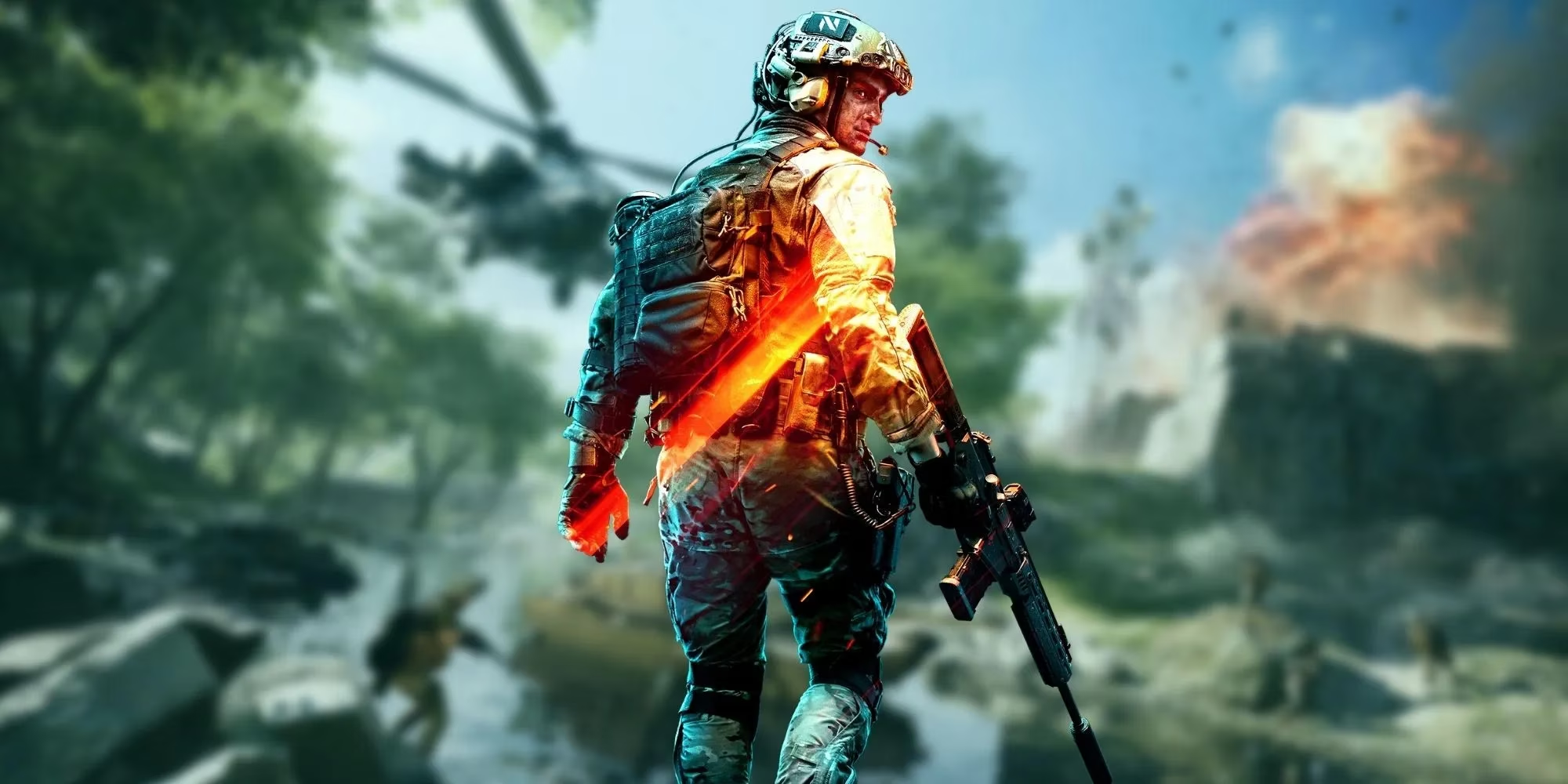
Why the Beta Made the Fall So Painful
The beta was not perfect, but it was fun. Orbital gave me a vertical playground, and the 128-player concept felt genuinely new. When the final release arrived, maps like Breakaway performed decently, but many others felt rough. The number of players and war vehicles on a map caused a host of performance issues, while bad connections and assorted glitches made firefights feel unreliable. I could not enjoy the all-out war concept because the planned chaos was peppered with far too much additional chaos that was not intentional. That is the key distinction: Battlefield is supposed to be chaotic, but it should be readable chaos. At launch, too often it was noise.
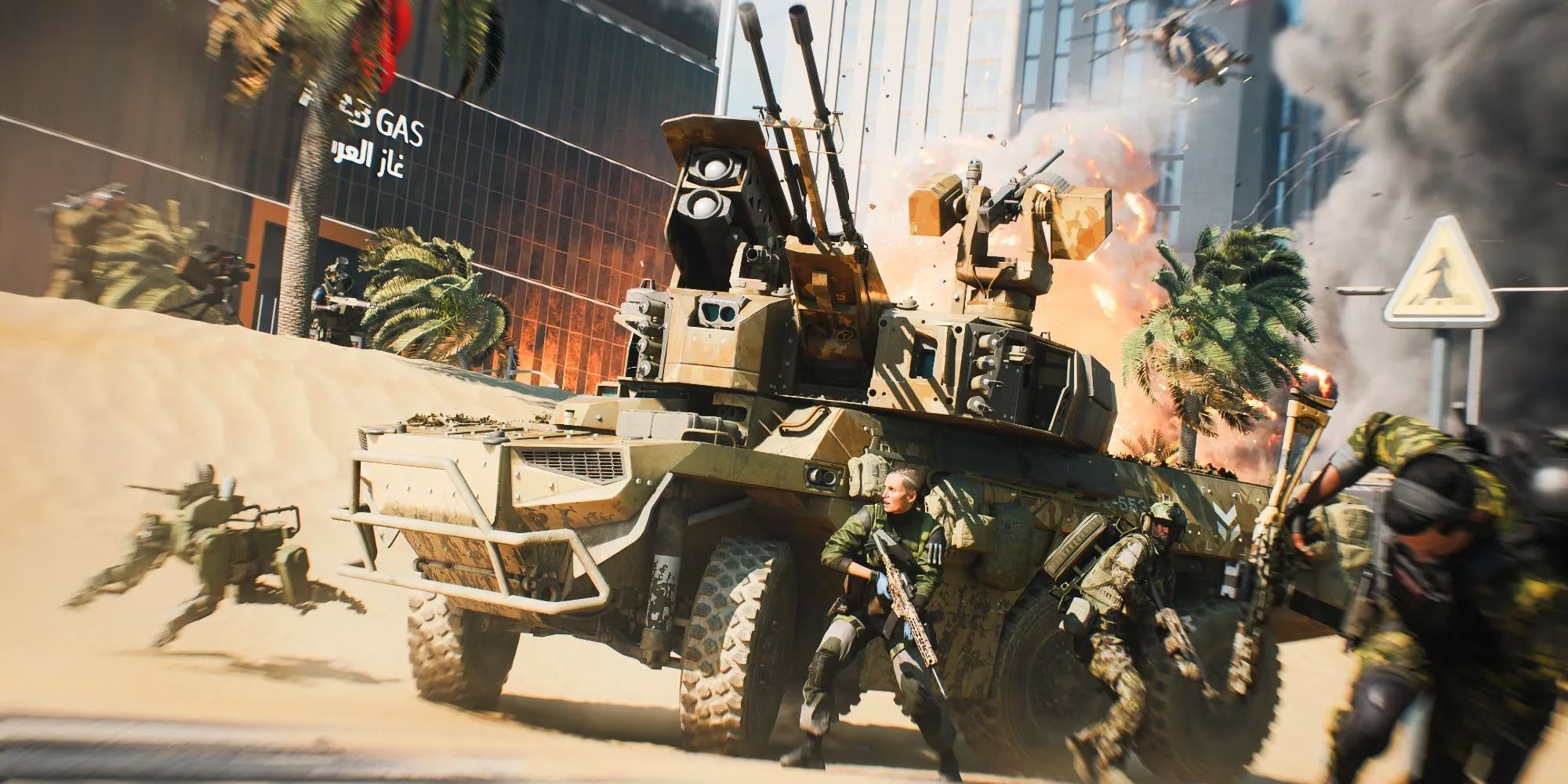
Here is how I break down the biggest launch problems and the fixes that were needed:
| Problem in 2021 | How it hurt matches | What DICE needed to do |
|---|---|---|
| ⚠️ Performance drops | Frames tanked during big fights | Optimize 128-player modes |
| 🚗 Vehicle spam | Infantry play felt unfair | Rebalance vehicles and counters |
| 📡 Network issues | Hit registration felt inconsistent | Improve netcode and servers |
| 🐛 Progression bugs | Unlocks and XP failed to track | Stabilize progression |
| 🗺️ Map flow | Some maps felt empty or messy | Rework objectives and cover |
EA's Changes and Portal's Role
Despite the issues, there was hope. On December 2, EA announced that it would be expanding the Battlefield universe. That decision came as some members of the 2042 team left, which made the news feel bittersweet. Still, the expansion seemed likely to tie into the newly created Portal system. After criticism for Battlefield 2042's All-Out War playlist, Portal became a way for players to experience the game with fewer problems. It let me build custom modes, revisit classic weapons and characters, and enjoy a more controlled version of the sandbox.
DICE also rolled out Update 3, which fixed some issues. It brought back Rush for 2042 maps, weapons, and characters. That was a small but meaningful signal: the studio was listening. There was still clearly a lot of work to be done, but loyal fans stayed because the foundation was good. I was one of them. I kept playing Portal, earned XP and unlocks, and waited for the larger fixes. A traditional 64-player server returning through Portal felt like the most sensible path, and over time that direction helped 2042 feel more like a Battlefield game again.
The Content Foundation Was Never the Real Problem
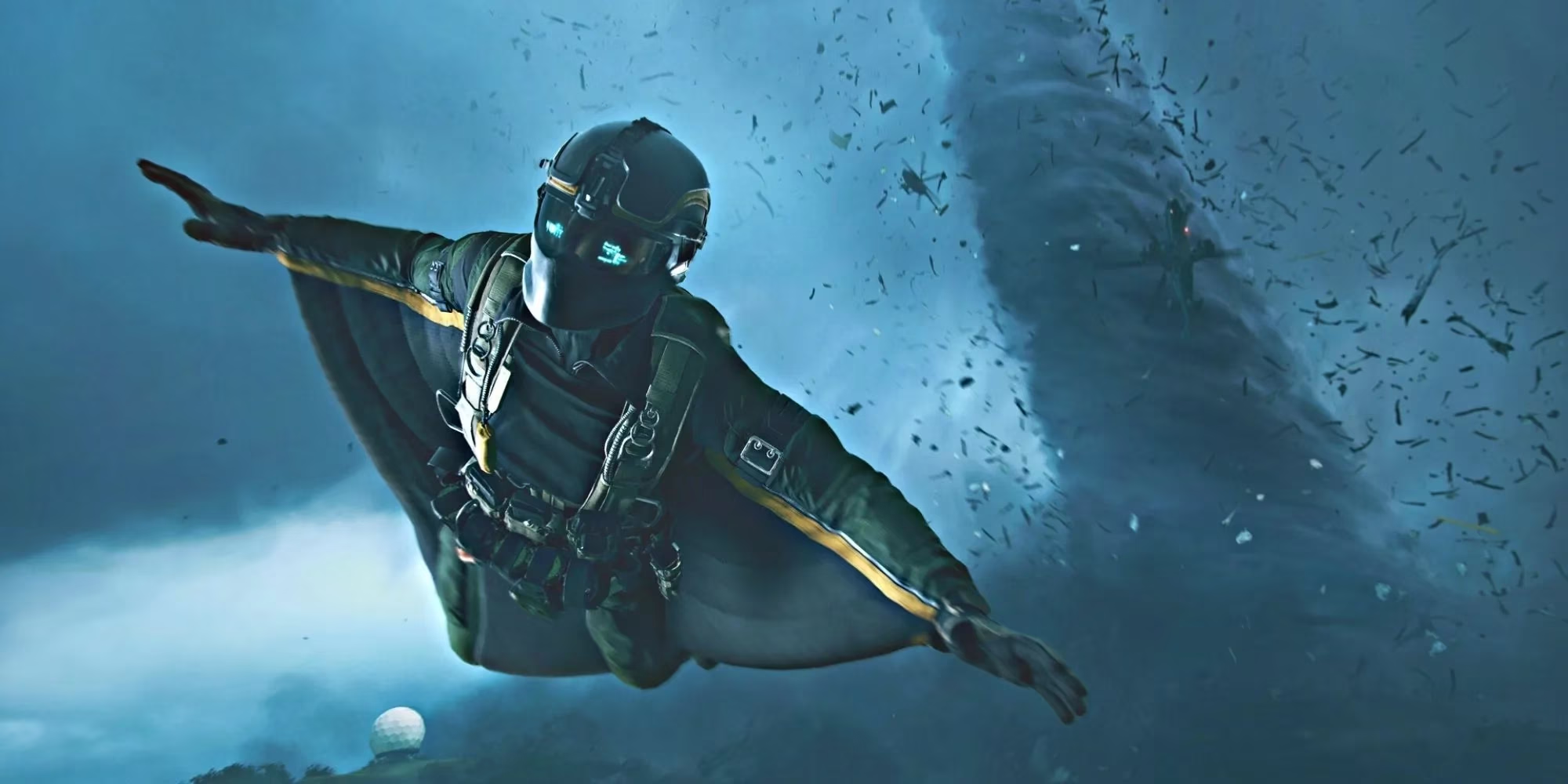
Battlefield 2042 was DICE's most ambitious game in the series to date. I still think about the tornado that randomly tears through the middle of a match. I still admire the beautiful graphics and visuals that pushed the limits. New elements like that gave the game a sense of spectacle that few multiplayer FPS titles can match. Most complaints were about low performance, bugs, or glitches, not the content itself. Yes, players mocked the Santa Claus skin, but that was relatively small compared to the rest of the game.
The foundation included:
-
🌪️ Dynamic weather and large-scale destruction
-
🧱 A bold 128-player vision
-
🕹️ Portal as a creative mode engine
-
🎯 Familiar Conquest and Breakthrough loops
-
🧑🤝🧑 Specialists that later evolved with class structure
That foundation is why the game could be fixed. It is also why I never fully counted it out.
Cyberpunk 2077 Was the Right Comparison
Cyberpunk 2077 launched with massive problems, and the gaming community used it as a warning about rushing huge projects. There was even a Battlefield 2077 video comparing 2042 to Cyberpunk. But Cyberpunk also proved that games can improve after players voice their concerns. It eventually earned hundreds of awards, including nominations at major ceremonies, and its later updates and expansion turned its reputation around.
DICE needed to do the same: tackle initial issues head-on and listen to community complaints. For a while, the studio was up-front on social media, acknowledging criticism and promising fixes. That messaging mattered. In 2026, I can see that Battlefield 2042 never reached the same redemption arc as Cyberpunk 2077, but it did become a better game than its launch version. The lesson is still valid: a bad launch is not always a permanent death sentence.
Where Battlefield 2042 Stands in 2026
By 2026, Battlefield 2042 is no longer the center of EA's live-service plans. Seasonal support eventually ended, and DICE shifted focus toward the next era of Battlefield. Yet the final state of 2042 is far more playable than what I experienced in 2021. Portal remains a sandbox for custom matches. The 64-player experience feels more grounded. Class structure and map improvements helped restore some series identity. The game is not perfect, and it never fully recaptured the hype of that beta, but it did earn a measure of respect from players who stayed.
If I were advising DICE for the future, I would say:
-
🛠️ Never ship a core mode in a broken state.
-
👂 Treat beta feedback as a warning, not a marketing win.
-
🧪 Keep Portal-style creativity, but protect the core experience.
-
📅 Delay before launch rather than repair after launch.
-
🎮 Respect the Battlefield formula while innovating around it.
Battlefield 2042's current legacy is complicated. It has frustrating elements, missed opportunities, and a community that still debates what went wrong. But it also has hope. Games like Cyberpunk 2077 are a testament to recovery, and EA is big enough to support long-term fixes. With 2042's impressive foundation, players could finally experience All-Out Warfare the way it was meant to be played: with few enough bugs that its high points can be appreciated. In 2026, that is not a fantasy. It is a history lesson, and a warning for the next Battlefield.