Battlefield 2042 Season 1 in 2026: A Look Back at Zero Hour
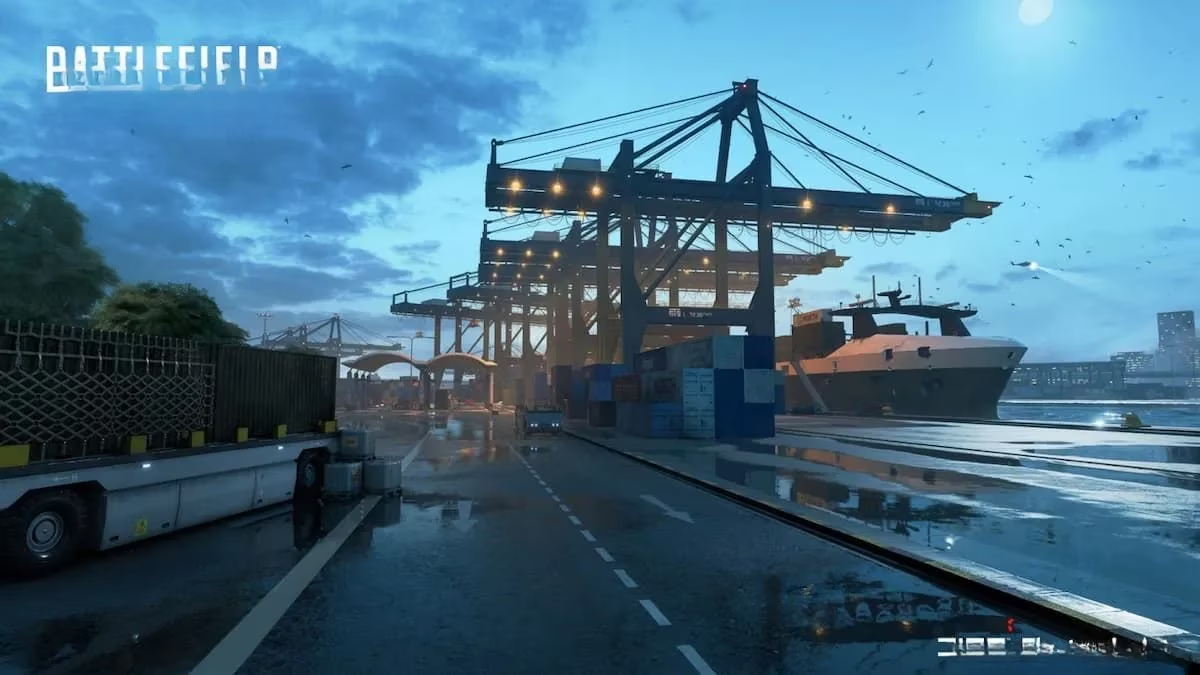
It’s 2026, and Battlefield 2042 has seen quite a ride. From a rocky launch to multiple seasons that tried to pull it back from the brink, the game’s trajectory became a case study in live-service redemption. But every story has its turning point, and for DICE’s controversial shooter, that moment was Season 1: Zero Hour. Surely you remember the hype—and the skepticism—surrounding that first season drop? Let’s rewind the clock and break down exactly what went down when Battlefield 2042 Season 1 finally went live.
Why Was Season 1 So Hyped (and Feared)?
To understand the magnitude of Zero Hour, you’ve got to appreciate the state the game was in before June 2022. Players had been waiting almost seven months since the November 2021 launch for meaningful new content. The core experience was battered by bugs, missing features, and a community that felt betrayed. So when EA officially announced that Season 1 would arrive on June 9, 2022, the question on everyone’s mind was simple: Will this save the game, or is it too little, too late?
DICE promised a new specialist, a fresh map, new weapons, vehicles, and a shiny Battle Pass. But would it be enough to pull players back from the likes of Warzone and other competitors? The stakes couldn’t have been higher.
Global Release Timings: When Could You Jump In?
Back in 2022, DICE went for a simultaneous worldwide launch. If you were planning to be among the first to drop into Exposure, here’s the exact schedule that ruled the day:
| Region | Release Time |
|---|---|
| UTC (Universal) | 8:00 AM |
| AEST (Australia East) | 7:00 PM |
| JST (Japan) | 5:45 PM |
| EST (US East) | 4:00 AM |
| BST (UK) | 9:00 AM |
That’s right—European players got a sensible morning start, while American east-coasters had to set the coffee pot for a 4 AM grind. Dedication, or just a lack of sleep? You be the judge. What made this launch particularly smooth was the absence of server downtime. DICE pushed the update live without taking the servers offline, letting players hop straight into the action the moment the clock struck zero. A rare but welcome move for a title that had seen its fair share of technical hiccups.
What Did Season 1 Actually Deliver?
Even in 2026, when we look back with the benefit of hindsight, Season 1’s content drop was a modest but crucial foundation. Here’s what the package included:
🌄 New Map: Exposure (Canadian Rockies)
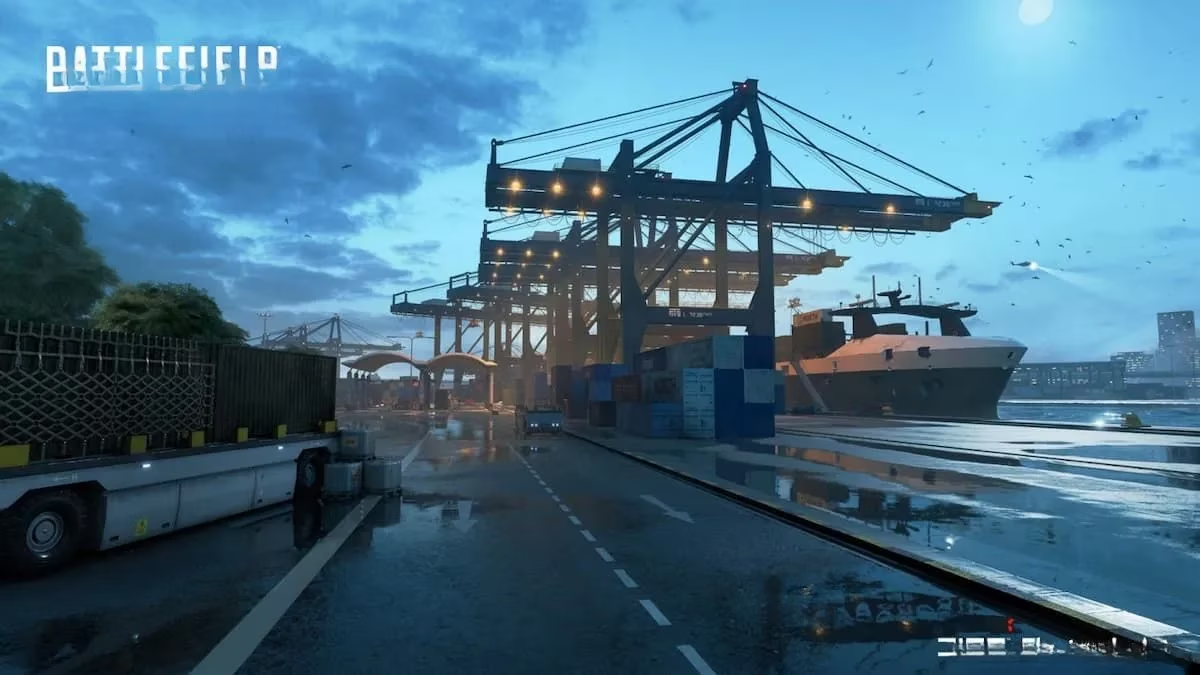
The star of the show was undoubtedly Exposure, set in the breathtaking Canadian Rockies. The map featured a massive landslide that had ripped open a research facility, creating vertical gameplay unlike anything Battlefield 2042 had seen before. It supported two distinct modes:
-
Exposure (Conquest): Up to 128 players (on PC and current-gen), offering the classic all-out warfare chaos.
-
Exposure (Breakthrough): Sectors-focused assault with 64 players, tighter and more intense.
🚁 New Specialist: Ewelina Lis
Say hello to Lis, the vehicle-killer expert who quickly became a fan favorite. Armed with a G-84 TGM guided missile launcher, she could manually steer rockets into helicopters and tanks. In a game where vehicles often dominated, Lis was a game-changer. Could one specialist really shift the balance? Many players argued that she was the most impactful addition since launch.
🔫 Weapons and Cosmetics
Season 1 added two new weapons:
-
BSV-M (marksman rifle)
-
Ghostmaker R10 (crossbow)
Plus the Battle Pass brought 100 tiers of cosmetics, including weapon skins, player card backgrounds, and specialist outfits. Veterans remember grinding for the “Cold Steel” and “Heatwave” legendary skins—some of which are still rare sights in 2026 lobbies.
The Battle Pass: Free vs. Premium
The introduction of the Battle Pass was a pivotal moment. Battlefield had experimented with live-service elements before, but this was the franchise’s full-on seasonal model debut. Here’s a quick snapshot of what the Zero Hour Battle Pass offered:
| Pass Tier | Cost (2022) | Rewards |
|---|---|---|
| Free | Free | 30 tiers of unlocks, including weapons |
| Premium | 1000 BFC (approx. $10) | All 100 tiers, exclusive legendary skins, instant specialist unlock |
Players who bought the Premium pass could claim rewards immediately (no waiting for weekly missions), which was a clever carrot for those who wanted to bling out their Lis or show off rare weapon camos. Was it worth the price? Back then, the community was split. Now, as we see the blueprint it laid for later seasons, it was a necessary evil that funded DICE’s slow but steady recovery.
Server Downtime? None. Launch Day Chaos?
One of the standout positives of Season 1 was the technical execution. DICE confirmed there would be no downtime, and they delivered. The patch went live at the scheduled time, and despite the heavy load of returning players, servers held up remarkably well. This was a huge relief after the disastrous launch weeks where rubber-banding and hit-registration issues were rampant.
What Happened After Zero Hour?
Looking back from 2026, Season 1 was just the first step in a much longer journey. It proved that DICE could still ship content on time and that the core community wasn’t ready to give up. The map Exposure remained a staple in rotation for years, and Lis became a meta pick in almost every anti-vehicle squad. The Battlefield 2042 that players enjoy today—with its full suite of maps, specialists, and refined gunplay—owes a debt to that nervy June morning when Zero Hour kicked off.
So, were you there when Season 1 dropped, or did you jump in later? Either way, revisiting those early days reminds us how far the game has come. Battlefield 2042 might have stumbled out of the gate, but Zero Hour was the moment it started learning to walk again.
Whether you’re a nostalgic veteran or a new recruit exploring the game in 2026, there’s no denying that Season 1: Zero Hour was a turning point. Keep it locked for more deep dives into gaming history, and as always—see you on the battlefield.