Battlefield 2042's Downfall: What EA Learned by 2026
Remember when Battlefield 2042 was supposed to be the next big thing? It’s 2026 now, and the gaming landscape has shifted dramatically, but the cautionary tale of DICE’s overly ambitious shooter still echoes through boardrooms and Discord servers alike. The game didn’t just stumble out of the gate—it face-planted so hard that even EA, a company not known for public mea culpas, had to admit things went terribly wrong.
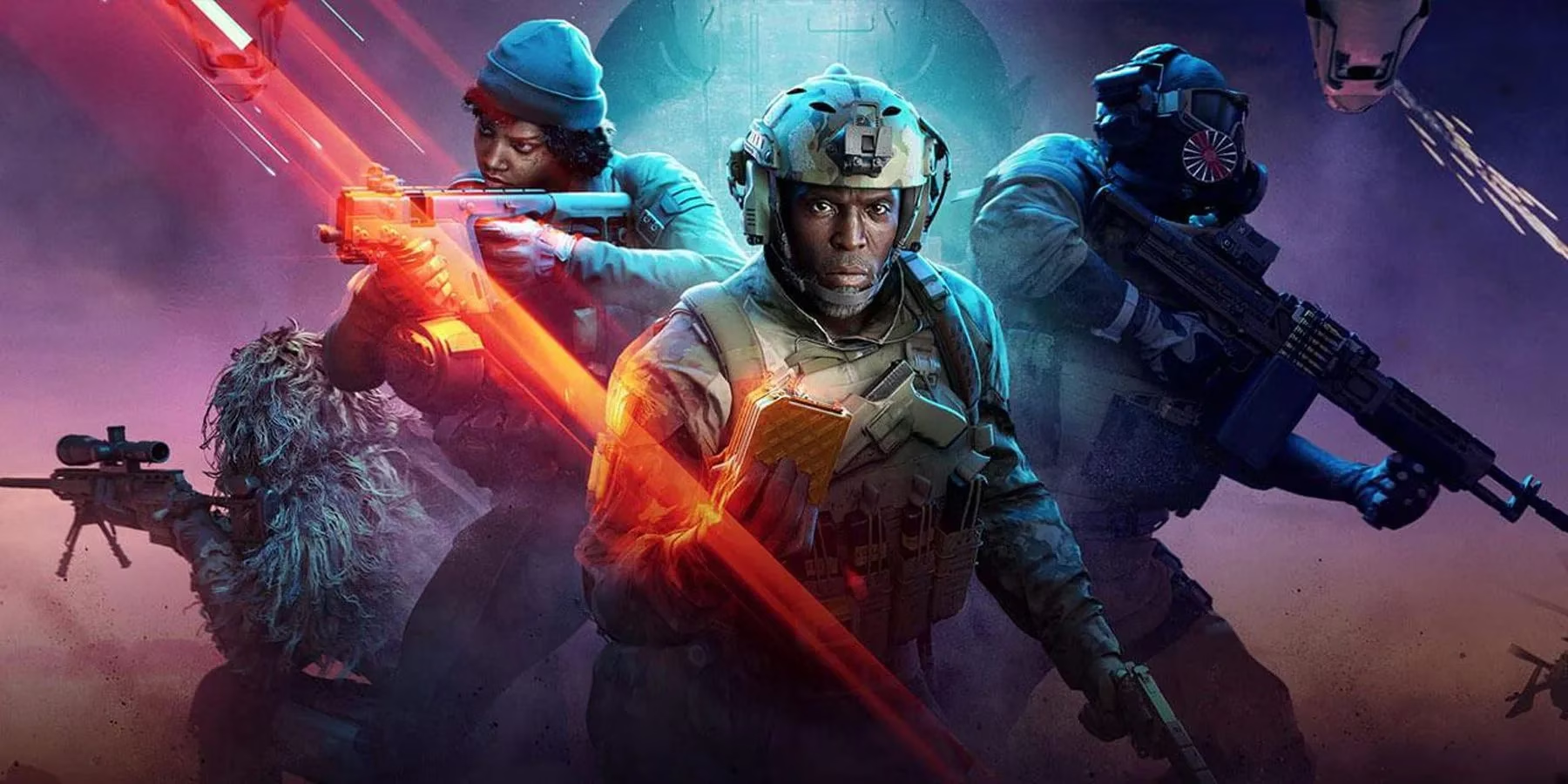
Back in early 2022, the discourse around Battlefield 2042 was nothing short of a dumpster fire. The launch was riddled with bugs, from floating soldiers to vehicles that randomly phased through the map. But technical issues were only part of the problem. DICE made several design choices that left fans feeling betrayed. Remember the decision to scrap the classic Class system for Specialists? Players asked themselves, “Where’s my sense of team play?” The result was a chaotic mess where everyone ran around as the same handful of heroes, spouting cringe - inducing one - liners that killed any semblance of immersion. On top of that, the maps felt too large and barren, the destruction that defined previous entries was severely toned down, and staple features like persistent lobbies, a server browser, and even a proper scoreboard were mysteriously absent at launch. It was as if the developers had never played a Battlefield game before.
EA’s Moment of Reckoning
Fast forward a few months after release, and EA finally acknowledged the elephant in the room during an investor conference call. The publisher bluntly stated that Battlefield 2042 failed to meet expectations, citing “unexpected performance issues” and the added complexity of remote work during development. But the real gut punch came when they admitted, “Some design choices did not resonate with our community.” That’s corporate speak for “we messed up.” Analyst Daniel Ahmad live-tweeted the highlights, and the sentiment was clear: the game’s negative Steam reviews—mostly negative, mind you—weren’t just noise. Players had legitimate gripes.
Yet here’s the question: did EA really understand the depth of the backlash? At the time, they promised major updates and reaffirmed their commitment to Battlefield 2042. But the community’s trust was shattered. This was the same franchise that had thrived on large-scale warfare, teamwork, and sandbox chaos. Replacing that with a hero-shooter-lite framework felt like a desperate chase for trends. And the trend-chasing didn’t stop there. The game also introduced Hazard Zone, an extraction mode that tried to mimic the success of Hunt: Showdown and Escape from Tarkov but lacked the tension and depth that make those games work. By 2026, you’d be hard-pressed to find a full lobby in Hazard Zone—assuming the servers are even still up.
A Tale of Two Games: Battlefield vs. Apex Legends
While Battlefield 2042 was busy cratering, Respawn Entertainment’s Apex Legends was doing the exact opposite. During that same 2022 conference call, EA boasted that Apex gained 28 million new players in 2021 alone and was on track to hit a staggering $1 billion in net bookings for the fiscal year. Can you imagine the contrast? One team struggled to keep players engaged with a full-price $70 title, while the other printed money with a free-to-play battle royale that launched with only one map. Apex Legends continued to grow, and by 2026 it has cemented itself as one of the pillars of EA’s live-service strategy alongside franchises like EA Sports FC and The Sims. Meanwhile, Battlefield 2042 became a textbook example of how not to handle a legacy IP.
This wasn’t simply a matter of bad luck. Battlefield 2042’s problems ran deeper than any patch could fix overnight. The core design philosophy was flawed. How could DICE have forgotten that Battlefield fans crave environmental destruction, class-based teamplay, and a grounded military tone? The tone-deaf quips from Specialists—“I’m not overconfident, I’m just better than everyone else”—felt ripped from a bad superhero movie. By contrast, Apex Legends’ characters have personality, but they exist within a world that doesn’t take itself too seriously from the start. Battlefield, historically, was a grittier experience. When you blend that with cartoonish voice lines, you get tonal whiplash. And the players noticed.
The Long Road to Nowhere (or Somewhere?)
So where are we in 2026? Did DICE manage to pull a No Man’s Sky-style redemption arc? The short answer is: not really.
To their credit, the developers did roll out a series of significant updates over the next few years. They reintroduced a semblance of classes in a later season, added more maps—including some fan-favorite remakes—and finally delivered the scoreboard everyone wanted. But the damage had been done. The player count never recovered to the levels needed to sustain a healthy matchmaking pool across all modes. Many of the promised features arrived months or even a year late. By the time the experience was “fixed,” the majority of the player base had moved on to other shooters like Call of Duty: Warzone, Tom Clancy’s Rainbow Six Siege, or the ever-present Apex Legends. It’s a classic case of “too little, too late.” Could a Battlefield game ever regain that magic? That remains to be seen, but 2042’s legacy will forever serve as a warning.
EA hasn’t completely given up on Battlefield as a franchise. Industry whispers suggest that the next installment, likely releasing around 2027, will return to a modern or historical setting with a heavy emphasis on the tried-and-true class system and destructive environments. If there’s one lesson DICE learned, it’s that you don’t fix what isn’t broken. The question is whether the community will trust them again. After all, words are cheap. Remember the dedication EA showed to Anthem? Exactly.
What Can We Take Away in 2026?
Looking back, Battlefield 2042’s failure was a perfect storm of misguided ambition, technical debt, and a disconnect between developers and their core audience. It’s a reminder that even the biggest publishers aren’t immune to hubris. The game’s poor performance wasn’t just about bugs; it was about an identity crisis. And while EA reportedly scrapped plans for a paid Year 2 pass and eventually made the game a regular fixture on subscription services like EA Play, it never recaptured the cultural moment it aimed for.
On the flip side, Apex Legends proved that when Respawn listens to its community and doubles down on what makes a game fun, the rewards are immense. By 2026, the battle royale has evolved with new legends, maps, and even permanent alternative modes that keep things fresh. It’s almost poetic that the spin-off from Titanfall 2 outlasted and outperformed a mainline Battlefield title.
In the end, Battlefield 2042 is a fascinating case study. It shows that no amount of marketing hype can save a game that fundamentally misunderstands its audience. As gamers, we often ask: “Why do developers keep making these mistakes?” The answer might be simpler than we think—sometimes the pressure to chase trends overrides the instinct to preserve what already works. Here’s hoping that by 2026, the industry has learned that lesson for good.